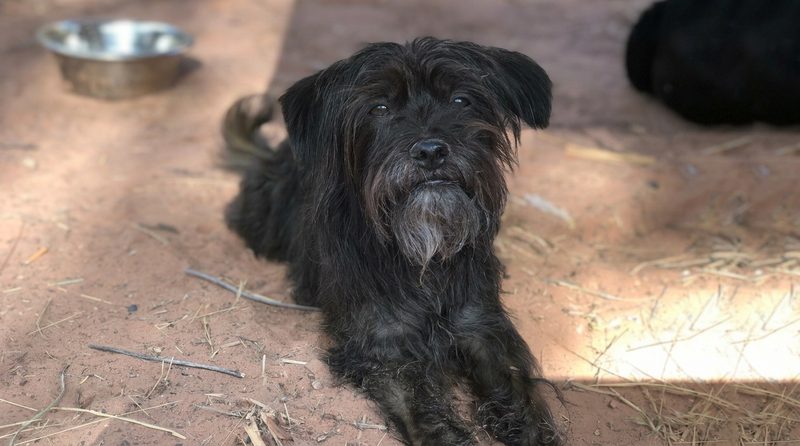
Frodo came to me when he was eight years old, a perfect storm of training challenges. He taught me never to underestimate what is possible when training begins with safety, patience, and trust.
Saving Frodo
My mom always had a soft spot for the underdogs.
She had rescued Frodo from a difficult situation. She learned that he was being relinquished to a shelter and would likely be euthanized due to aggressive behavior. Once she brought him home she was able to manage some of his behaviors, but he never received the training that could help him feel safe enough to navigate the world with confidence.
He Became the Dog Everyone Feared
Shortly after my mom passed away, Frodo came to live with us. I knew that if I couldn't help him, his chances of finding another home were very small.
Many people who had known Frodo before I adopted him believed something was neurologically wrong with him. They described him as unpredictable. He would often switch from what people considered "fine" to becoming aggressive with no warning.
Many of my family members were genuinely afraid of him. Some avoided being in his presence because they never knew when he might react.
Some of Frodo's struggles were already well known. His reactivity, separation anxiety, and bite history came with him. But once he came home, I began to discover challenges no one had fully appreciated. He was afraid to be outside, even in our own backyard. A quiet trip to the park was enough to send him into a state of panic.
Walks were especially revealing. He zigzagged from one side of the path to the other, panted heavily, and pulled frantically. Most of the time, it was as though he had blinders on — his only goal was to get back home.
He also struggled with my seven-year-old stepson, Ami. Like many children, Ami was energetic, loud, and constantly moving. The activity overwhelmed Frodo, and those moments often triggered reactive and aggressive behavior.
The more I got to know him, the more I realized that his aggression wasn't unpredictable at all. Frodo wasn't going from "fine" to aggressive without warning. He was living with a level of chronic stress that left him vulnerable to even the smallest triggers.
Seeing Frodo Through a New Lens
The more I listened to people describe Frodo, the more I realized we were looking at the same dog through completely different lenses.
They saw a dog who switched from "fine" to aggressive without warning.
I saw a dog living in a constant state of stress and overwhelm. What appeared to be "fine" was often a dog quietly carrying more stress than anyone realized.
Looking back, I'm not sure Frodo knew what it felt like to move through the world without feeling overwhelmed.
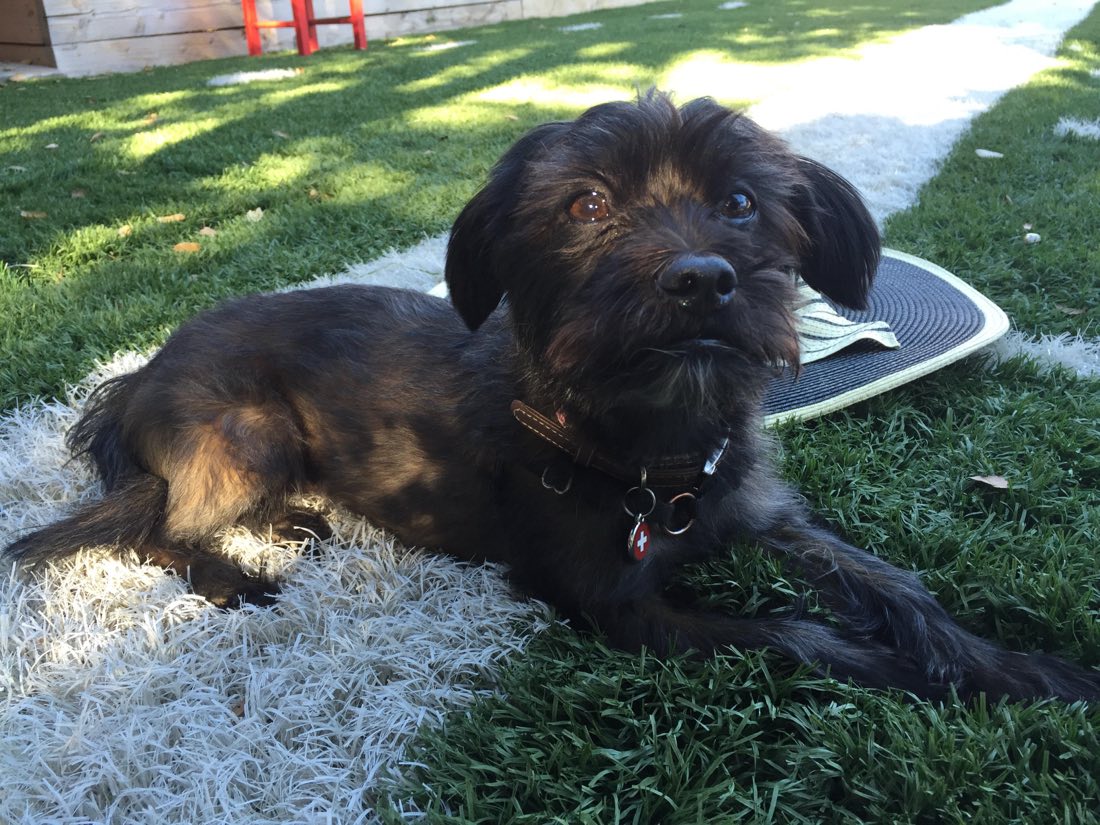
I started noticing the fixed expression, the intensity in his eyes, and how alert he remained, even while lying down. Those moments taught me that looking "fine" isn't the same as feeling calm or safe.
New Beginnings
At the time, my son was only five weeks old. My time and attention were limited, but I was determined to create an environment where everyone felt safe — both emotionally and physically.
Creating that environment also meant helping Frodo learn to live peacefully with Fritz, our other dog. Their relationship was tense at first, and I knew trust would have to be strengthened there, too. Every important relationship in Frodo's life would need to be built on the same foundation of connection and understanding.
I was ready to invest the steady, consistent effort Frodo needed. But if I'm completely honest, even I questioned how much change was truly possible. I wondered whether his aggressive behavior would always require careful management, or if he could someday learn to trust the people around him and move through the world with calm confidence. I was ready to keep things as simple as he needed them to be — but I hoped for more.
Fortunately, Beatrix had already taught me the value of patience and moving at the dog's pace. This wasn't a situation that called for complicated training. There was one simple objective: our training needed to help him feel safe and connected. I believed that when a dog truly feels safe, the world becomes something to explore rather than something to defend against.
I believed in the process. I just didn't know how much change was possible. Frodo was about to answer that question.
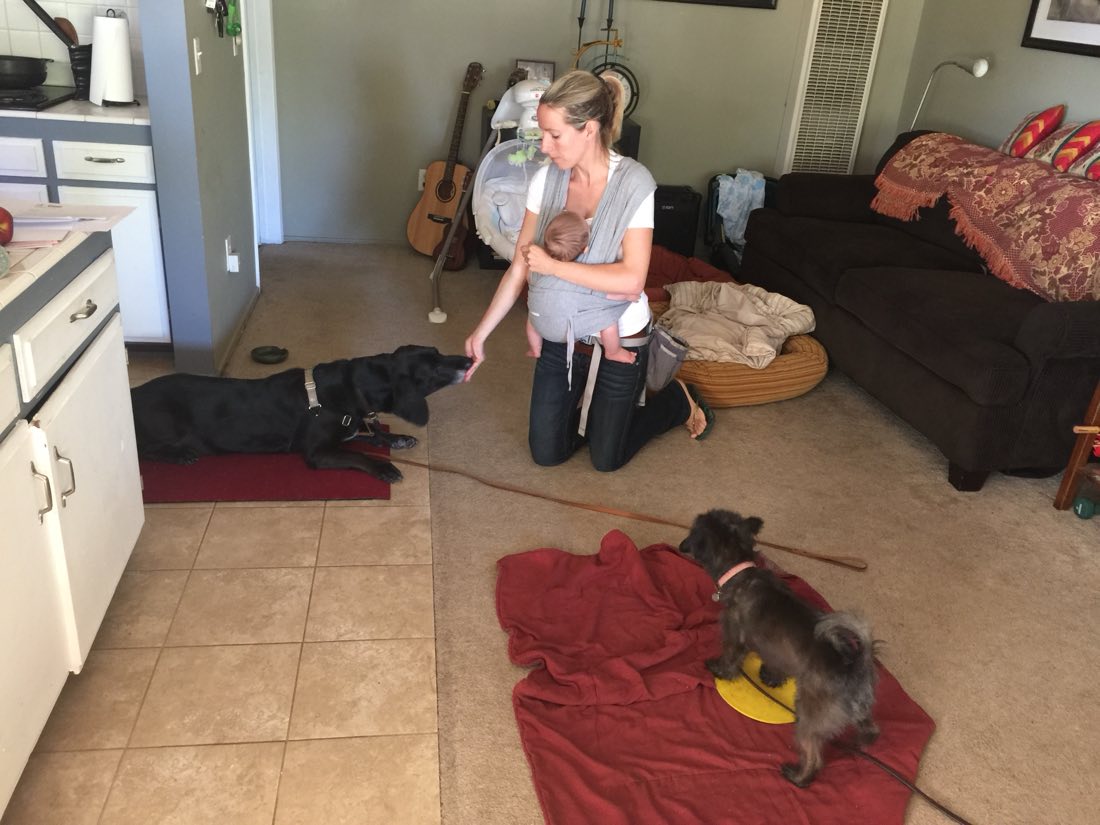
Much of our early training included Fritz as well. Building a peaceful relationship between the two of them became another important part of Frodo's foundation.
Creating a Baseline
In our early weeks together, Frodo was so intensely anxious that training consisted of hand-feeding meals to build focus and connection. Before he could learn anything new, he first needed to develop the emotional baseline where learning was even possible.
For the first year or two, our focus wasn't on adventures. It was on helping Frodo feel safe in the ordinary moments of everyday life. We weren't trying to see how much he could handle. We were helping him discover that the world didn't always have to feel overwhelming.
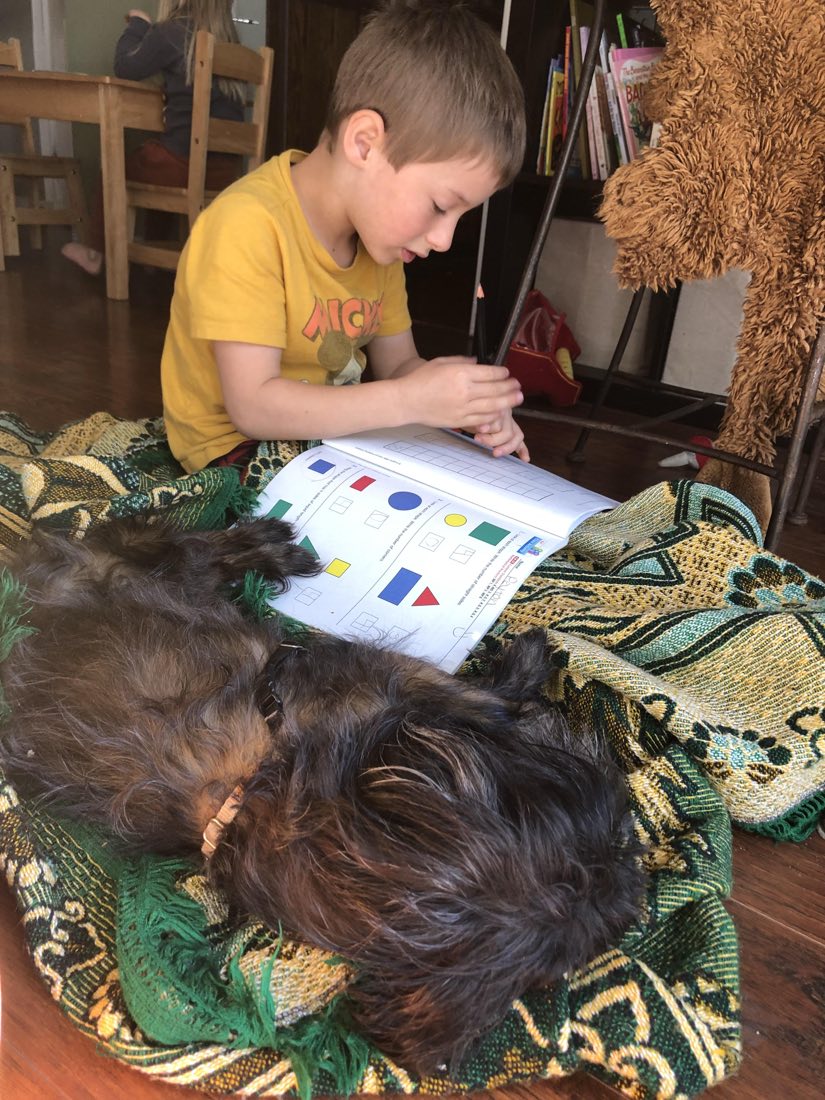
Slowly, those ordinary moments began to change. With patience, Frodo became a gentle, loving companion to my children as they grew up. He started to enjoy short walks in our neighborhood, and little by little, his world began to expand.
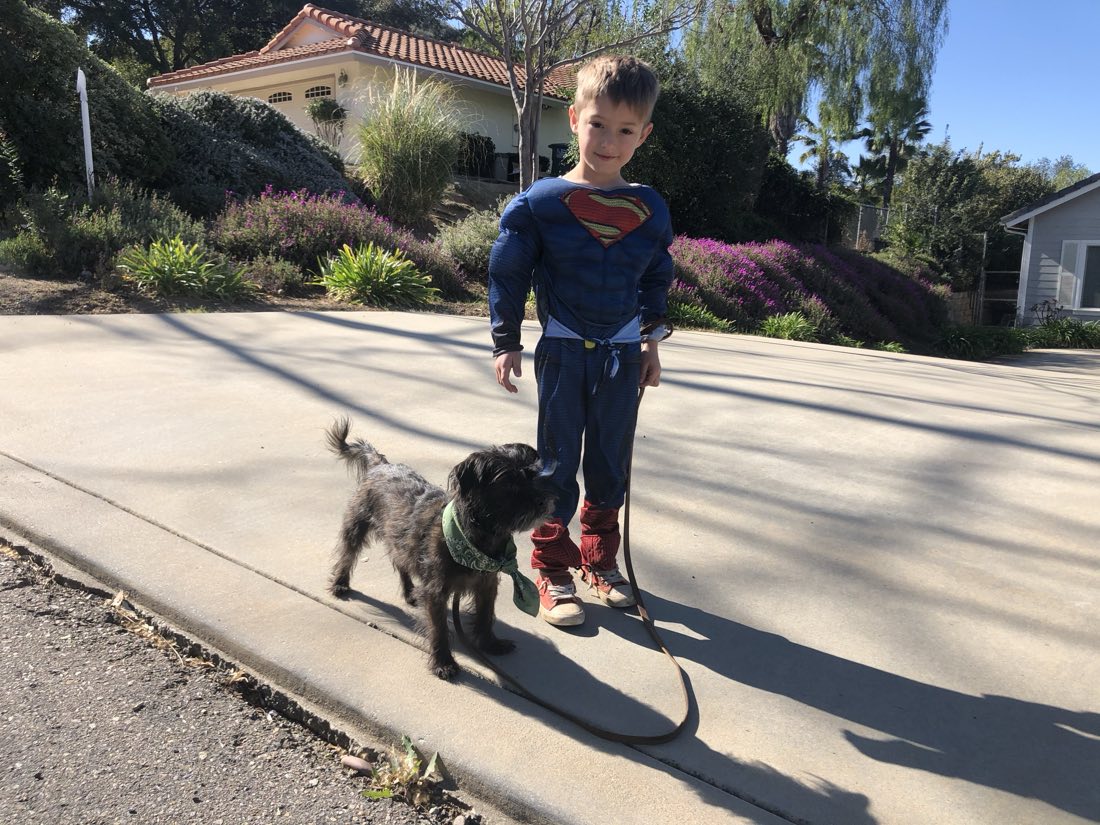
With patience, Frodo began to enjoy short walks through our neighborhood.
Frodo's Big Adventure
Then came what we now affectionately call Frodo's Big Adventure. One afternoon, when my son was still a toddler, he opened the front gate without us realizing.
Frodo disappeared.
We had no idea where he was or what would happen if someone tried to approach him. We searched everywhere. When we finally found him, we learned that a woman and her young daughter had picked him up and brought him along for their day while they tried to find his home.
They drove him to the beach. He relaxed on a café patio while they enjoyed lunch together.
I knew Frodo had made tremendous progress, but this was spending an afternoon with strangers, riding in a car, settling on a busy restaurant patio surrounded by people and other dogs.
When they brought him back, they told us he was the most well-behaved dog — better behaved, they joked, than their two Dachshunds.
When they shared photos from his day, I saw a dog who looked happy and, in many ways, proud of himself. We were relieved to have him home, but I was also struck by something else. A dog who had once been consumed by fear was beginning to show a genuine curiosity about the world around him.
What Frodo Taught
Frodo gave me something I had never experienced before.
By the time he came into my life, I had already spent years helping other families work through fear, anxiety, and aggression with their dogs. I had watched incredible transformations unfold.
But Frodo was different. He gave me a front-row seat to that transformation every single day.
Kodi had been with me since birth. Fritz and Beatrix had both come into my life as adolescents. But Frodo was already eight years old. He had spent years rehearsing anxious behaviors, avoiding the world, and relying on reactive and aggressive coping strategies that had become deeply ingrained.
Living with him, I found myself wondering how much change was truly possible after so many years.
Frodo answered that question in the most personal way.
I already believed that dogs had an incredible capacity for growth and positive change. What Frodo showed me was how profoundly that change can reshape a dog's experience of the world, opening the door to curiosity, connection, and a life that once seemed out of reach.
"You can't go back and change the beginning, but you can start where you are and change the ending."
What Lasting Change Really Looks Like
For a long time, the training focused on helping Frodo feel safe with the people who mattered most. Before asking him to navigate unfamiliar places, new people, or bigger adventures, we built confidence in the routines of everyday life. Each small success became the foundation for the next challenge. Over time, confidence slowly began to replace fear, and curiosity started to expand the boundaries of his world.
Training became a collection of building blocks that we could adapt to different environments and situations. Each exercise strengthened our communication, deepened our connection, and helped him become more grounded.
Behavior change isn't linear. You're asking the brain to build new habits, new expectations, and new ways of responding to the world. There will be moments that feel like incredible breakthroughs, followed by days that leave you wondering whether you've made any progress at all. That doesn't mean the foundation has disappeared. The highs and lows are a normal part of creating lasting change.
It takes time.
But when dogs are given that time — and when the process is built around clarity, connection, and trust — the results can be extraordinary.
What Became Possible
We always had to be thoughtful about how we introduced Frodo to new people, but over time his circle of trust continued to grow.
When Frodo first came home, nearly everything felt overwhelming. The backyard. Walks through the neighborhood. Car rides. Quiet parks.
Three years after Frodo came home, we packed the car for a two-week road trip to Colorado. At this point it felt like the next step in a journey we had been building toward for years.
Even then, I found myself wondering how he would handle it. New places. Long hours in the car. Hotels. Hiking trails. Campgrounds. So many unfamiliar experiences.
He exceeded every expectation.
The dog who had once struggled to leave the house became the picture of relaxation in the car. He explored new places with curiosity, settled easily into each new environment, and seemed to genuinely enjoy the adventure. It was hard to believe this was the same dog who had once found a quiet walk through our neighborhood overwhelming.
What surprised me most, though, wasn't the road trip.
It was the relationships he formed with my children.
They never knew the dog with the bite history. They knew the dog who was gentle, patient, and deeply loyal. Watching the bond they shared remains one of the greatest privileges of my life.
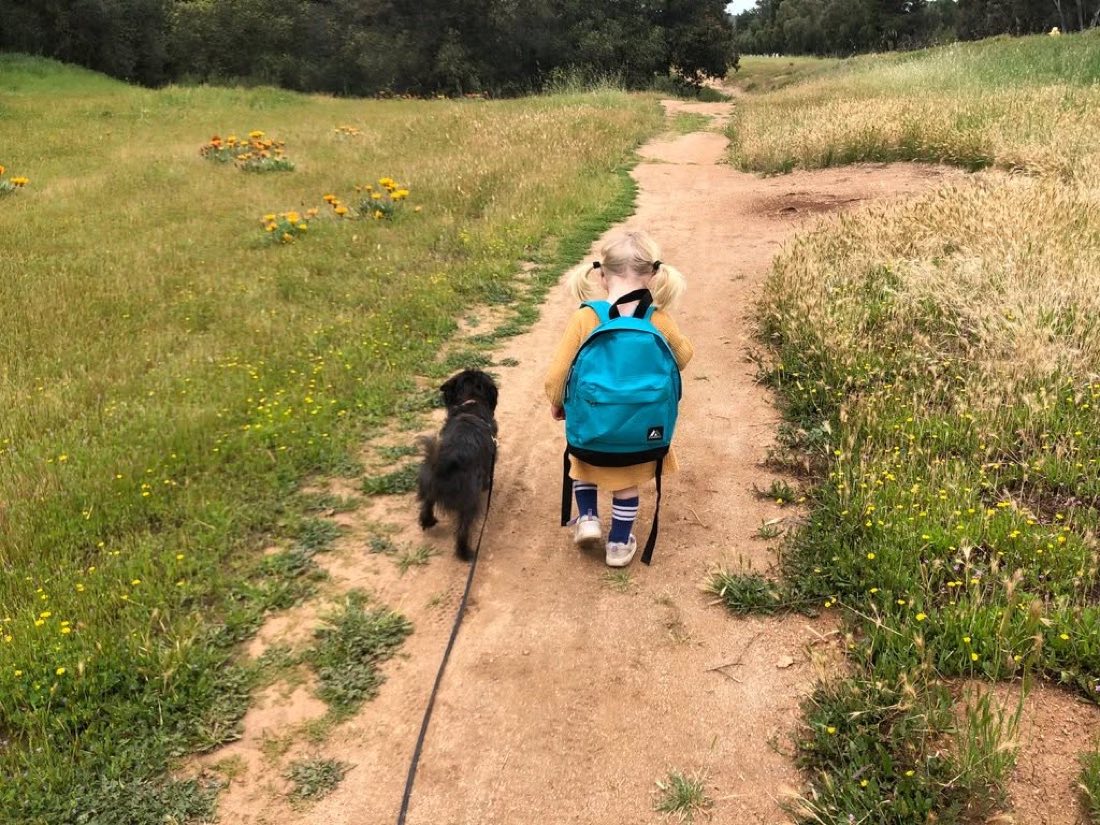
For Frodo, simply being able to walk down our street with confidence was a milestone worth celebrating.
Frodo reminded me that lasting behavior change isn't measured by how quickly a dog learns a new behavior. It's measured by how profoundly their relationship with the world can change.
He taught me that confidence doesn't come from pushing dogs beyond their limits. It grows when they're given the time, guidance, and understanding they need to feel safe enough to explore the world on their own terms.