
Beatrix taught me that confidence can't be forced. It grows when a dog feels safe, and shows you when they are ready for the next step.
Finding Beatrix
I first met Beatrix while helping a client choose a dog for a Valentine's Day charity auction that raised money for cancer research. She had just arrived at the shelter, so we couldn't meet her that day. Something about her caught my attention, though, and I couldn't stop thinking about her.
A few days later, I woke up with a fever, but I knew I couldn't miss the chance to meet her. I asked my brother to drive me back to the shelter.
When they brought her into the meet-and-greet room, it quickly became clear that she was deeply afraid. Whenever I moved toward her, she tucked her tail, lowered her head, pinned her ears back, and quietly backed away.
But beneath that fear was something else.
Every time I walked away, she would slowly follow behind me and sniff. Those small moments of curiosity felt incredibly significant. They reminded me that her fear wasn't the whole story.
It didn't take long for me to realize that Beatrix wasn't the right dog to be passed from person to person at an auction. She needed someone willing to move at her pace.
I knew I wanted to be that person.
The Early Days
The first few months were far more difficult than I expected.
Everything seemed to frighten Beatrix.

Beatrix's shelter intake photo.
A cup rolling across the sidewalk. A sewer drain. Children. New people. Loud trucks.
We would return home from a stressful walk, and she would urinate on the living room floor.
Then there was the barking.
I remember rushing through showers because I knew that if I stayed in too long, she would spend the entire time barking at every sound she heard outside.
She was also an escape artist. Every time I opened the front door, Beatrix would dart out the door. I'd scramble after her, hoping she'd stop before she got too far.
I couldn't help wondering if this was part of what had landed her in the shelter in the first place.
More than that, it stirred up one of the fears I'd had before adopting her. I had always assumed terriers were independent to a fault, more interested in following their own agenda than connecting with their person.
Watching her bolt out the door, I found myself wondering if I had been right.
I loved her deeply, but I also wondered whether we would ever be able to live a calm, peaceful life together.
At the time, these felt like separate problems to solve.
But they weren't, they were all telling the same story.
How do you build a relationship with a dog who doesn't yet feel safe enough to connect?

The Experiment
Before beginning formal training, I decided to conduct an experiment.
For the first three months after bringing Beatrix home, I intentionally didn't teach her a single behavior, not even “sit.”
I wanted to understand what a relationship looked like before formal training entered the picture.
Part of that curiosity was inspired by one of Beatrix's predecessors, Kodi. With him, our relationship had grown naturally through everyday life. We went on adventures together, learned about one another, and built a strong connection long before I ever asked him to perform formal behaviors.
It made me wonder:
Could that work with a dog like Beatrix?
Could her confidence and our connection grow through shared experiences, or did she need more?
Exposure Wasn't Enough
During those first few months, I focused primarily on exposure. Now I realize I was often asking more of Beatrix than she was ready for.
One place we visited regularly was Grape Street Dog Park. Unlike most dog parks, it wasn't fenced, and the dogs there tended to be calmer and more social. Because Beatrix seemed more comfortable around dogs than people, I thought it would be the perfect place to help build her confidence.
At first, everything seemed to be going well.
But over time, I began noticing small signs that she wasn't as comfortable as I thought. Then one day, she made herself unmistakably clear.
She fled the park.
Because the park wasn't fenced, she headed straight for home. I found myself jogging several blocks behind her before finally catching up, clipping on her leash, and quietly walking her home.
That moment stayed with me.
I had mistaken tolerance for readiness.
Beatrix had been telling me for some time that these outings were becoming overwhelming. I simply hadn't recognized the signs until she felt she had no other way to communicate.
Once I saw it there, I began noticing the same pattern elsewhere. Walks through the canyon left her more vigilant rather than more confident. Some experiences appeared successful in the moment, but over time they left her less able to cope with the world around her.
She was telling me she wasn't ready.
Instead of asking, “How can I expose her to more?” I began asking: “How can I help her feel safe? How can I help curiosity replace fear?”
The Turning Point
Before I began formal training, there was one final question I wanted to answer.
Trusting new people was incredibly difficult for Beatrix, and I wanted to understand how much simple exposure could help her build those relationships.
I invited a friend to spend the afternoon with us at Fiesta Island. We walked together for well over an hour, giving Beatrix plenty of time to observe, sniff, and simply exist alongside someone new.
On the surface, it looked like a successful afternoon.
But as I watched more closely, I noticed subtle signs that she still wasn't completely at ease. She wasn't shutting down, but she wasn't truly relaxed either.
When we returned home, I walked inside first. My friend followed a minute or two later.
The moment she stepped through the door, Beatrix erupted into barking.
She barked continuously. Even after my friend sat down quietly, she never settled. My friend stayed for only about thirty minutes, but throughout the entire visit Beatrix remained on edge. It was as though the afternoon we had just spent together had never happened.
That experience changed the way I thought about helping fearful dogs.
Between the dog park, the canyon, and now this, the pattern was unmistakable. Beatrix wasn't starting from a place of emotional security, so exposure alone was never going to be enough. From the outside, she often looked as though she was doing well. But underneath, she was carrying far more stress than I realized.
The very next day, I began what would eventually become the Base Training Method.
My goal was no longer simply to expose Beatrix to more of the world. Instead, I wanted to build a system of communication that allowed us to understand one another.
Each exercise became a small conversation, a way for me to recognize when Beatrix felt safe enough to learn, when she needed more support, and when it was time to slow down.
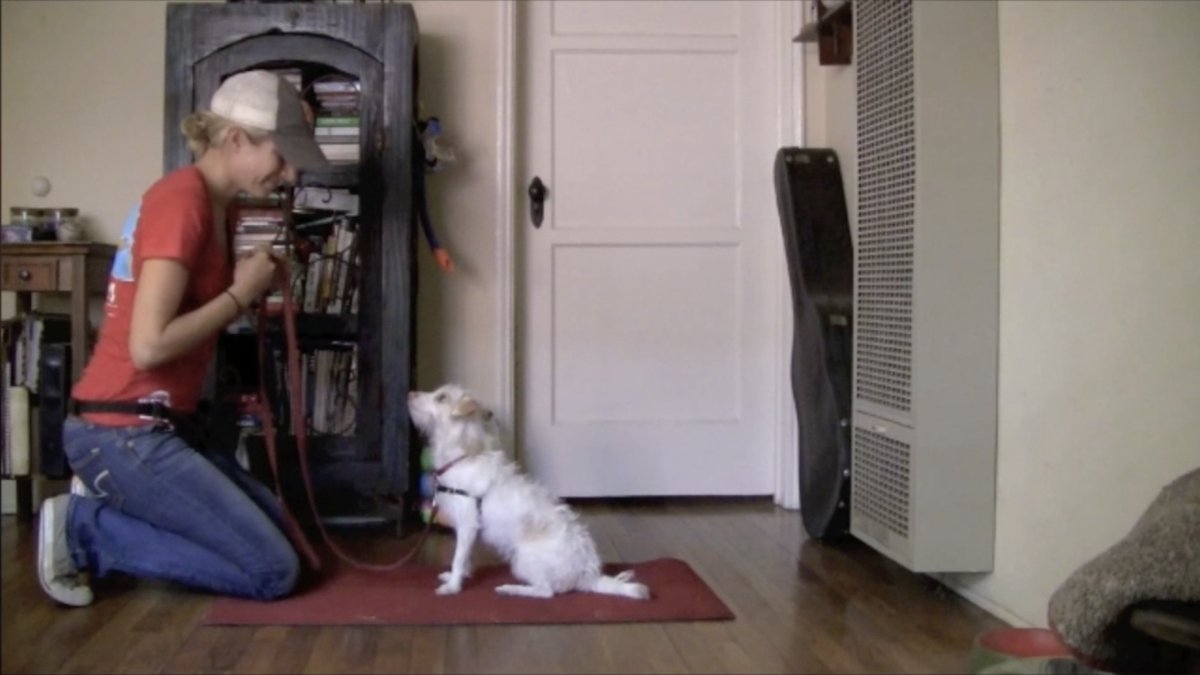
One of our early Base Training exercises. Each exercise built communication, confidence, and emotional regulation that later carried over into the real world.
For the first time, I realized that if I was going to help her work through her fears, I couldn't just arbitrarily choose the next step. I had to learn to understand what she was telling me.
Making Progress
Over time, I realized that training had become a shared language between us.
We spent countless hours working on heel position. Initially, this was an exercise designed to build connection, focus, and confidence. Over time, it became something much more meaningful.
Within about three months of beginning this new approach, it felt as though Beatrix and I had developed a real system of communication. She understood what I was asking of her, but just as importantly, I was learning to understand what she was telling me.
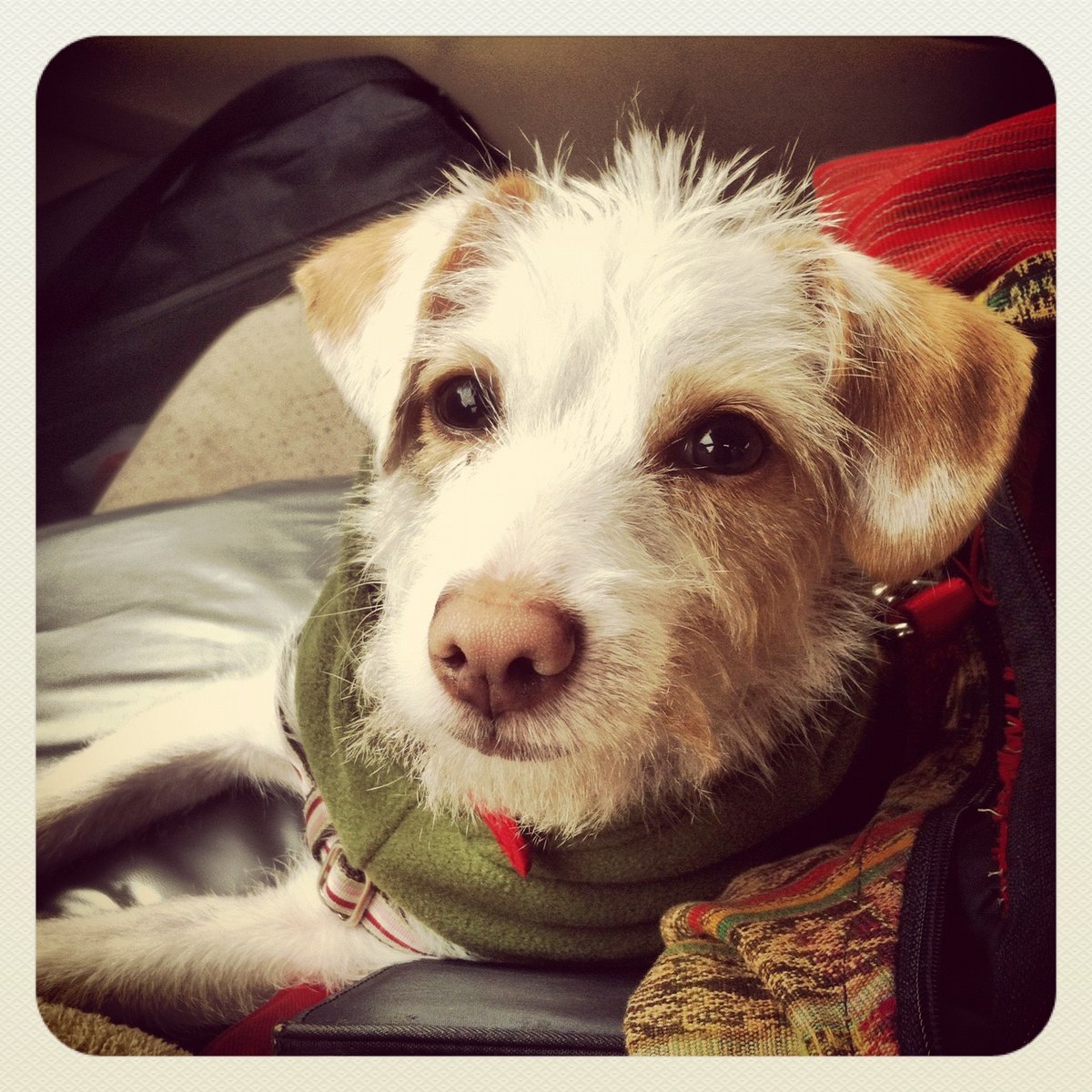
Around six months, I began seeing that communication carry over into everyday life. She was becoming more thoughtful, more resilient, and more curious about the world around her. Challenges that once overwhelmed her became opportunities for us to work through together.
By about a year, she was no longer simply participating in training sessions.
She had become my companion.
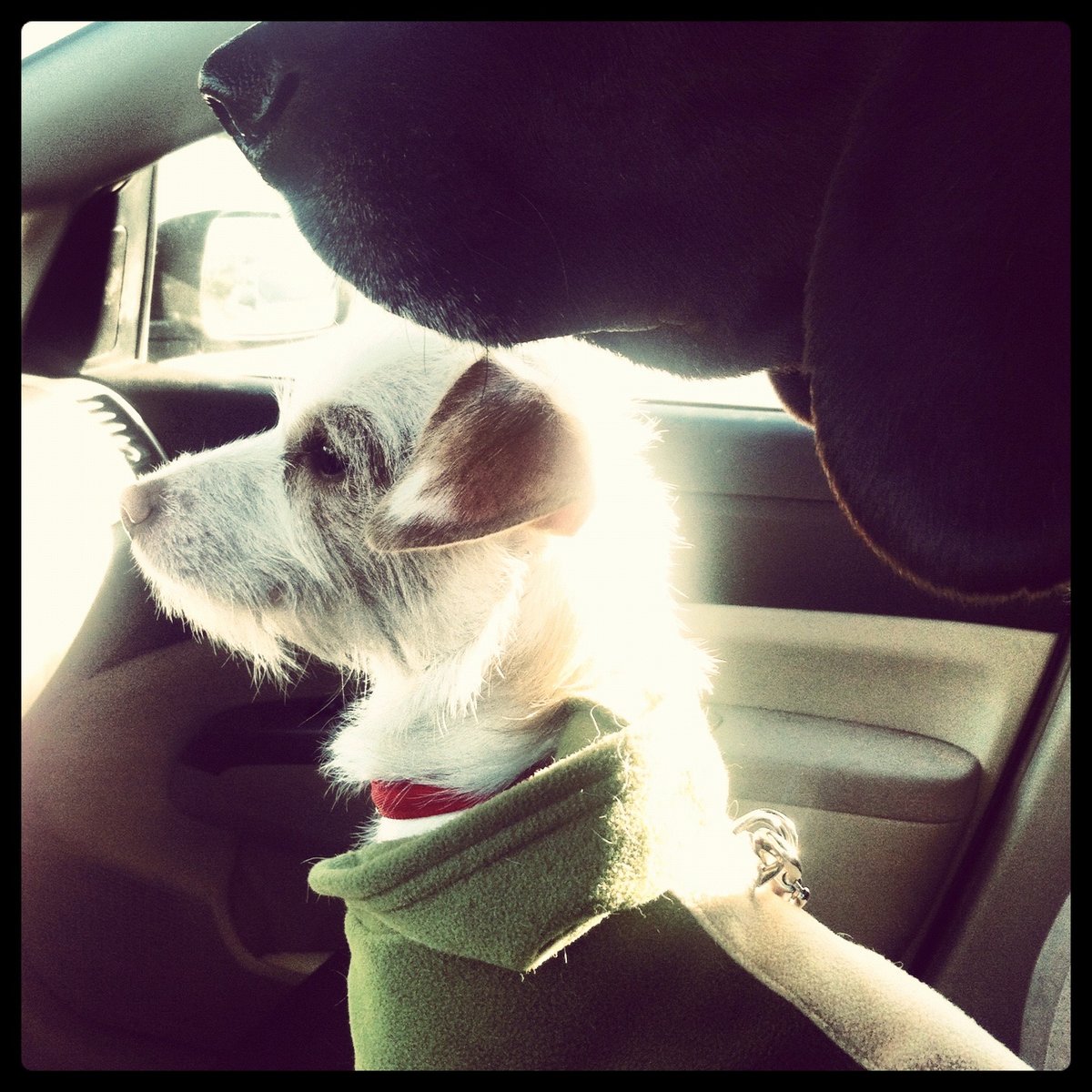
She traveled with me across the country, explored new places, and confidently joined me on adventures that would have been unimaginable when I first brought her home.
But perhaps the greatest takeaway wasn't how much Beatrix had changed.
It was realizing that I could never choose her pace for her.
She had to tell me when she was ready.
Two-Way Communication
One of the most unexpected things I learned from Beatrix was that our training had become a conversation in both directions.
When Beatrix met someone new, she was often hesitant at first. But once she decided she felt comfortable, she would quietly walk over, sit in heel position beside them, and then look up at me with what I can only describe as a proud expression.
She did this with my dad, close friends, and many other people throughout her life.
It always felt as though she was saying,
“I'm okay now.”
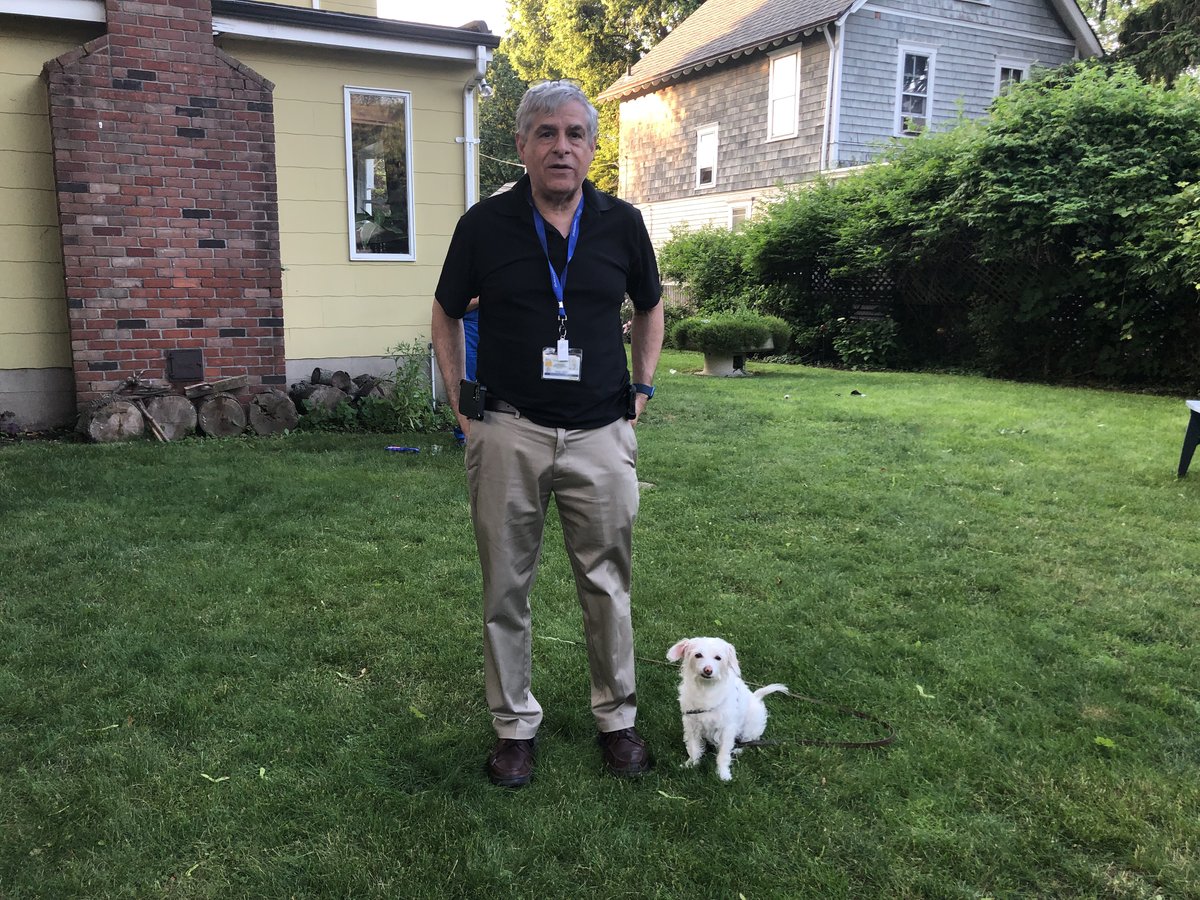
Through training, Beatrix learned how to communicate with me, and I learned how to recognize when she was ready, and when she wasn't.
That shared language became the foundation of the Base Training Method, a way of helping dogs and their people learn to understand one another.
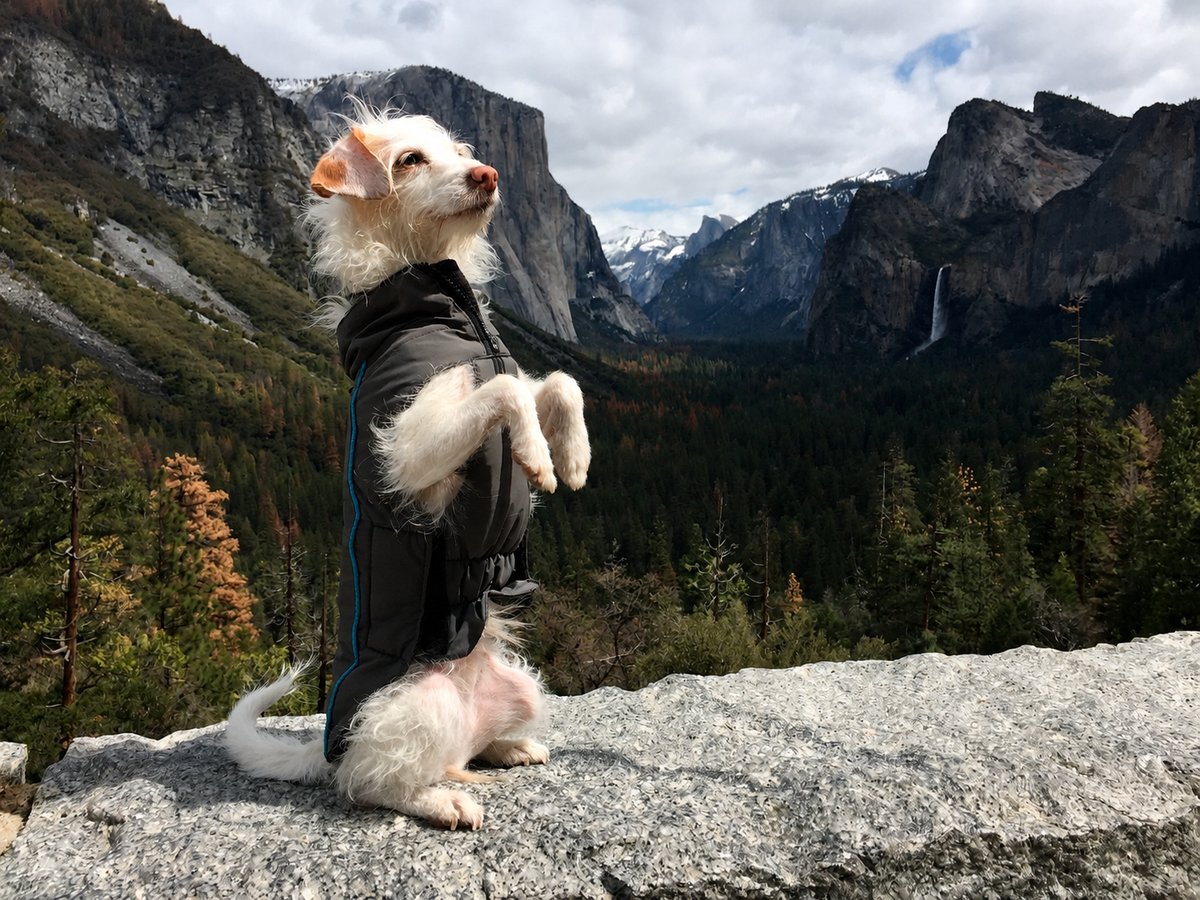
These adventures were the result of everything we had built together.