Healthy Feeding Schedule: 7 Steps for Dogs
If you're constantly switching foods or adding toppings just to get your dog excited for meals, the problem may not be the food itself. Often, the bigger issue is figuring out how much your dog actually needs and creating a feeding routine that supports a healthy appetite. Alyssa Rose walks through how to find the right quantity and build eating habits that support your dog's physical, emotional, and behavioral health.
In this lesson, I'll walk you through how to find the right food quantity and the 7 steps that build genuinely healthy eating habits.
Watch for the case study at 9:03. Lucky, a dog who started extremely underweight, and how his appetite and confidence changed over just four weeks.
Subscribe on YouTubeHow to find the right quantity, then the 7 steps to build the habit.
Bag feeding directions are a starting point, not a prescription. Your dog's actual needs depend on factors like body condition, age, activity level, metabolism, and health. Instead of relying only on the number printed on the bag, look at your dog's body condition and pay attention to how enthusiastically they actually eat.
Use your hands as well as your eyes. You should be able to feel the ribs easily without excessive fat covering, and your dog should have an appropriate waist and abdominal tuck for their individual build. Coat thickness, natural body shape, and breed can all make appearance alone misleading.
The goal is the sweet spot: the amount that keeps your dog excited at meal times, maintains a healthy appetite, and keeps them at an ideal weight.
- Feed a high-quality dog food. Look past the marketing and choose a nutritionally complete food that works well for your dog and fits your budget. More calorie-dense foods may require smaller portions, which is another reason to pay attention to the amount your individual dog actually needs rather than judging the meal by how full the bowl looks.
- Measure the food. Estimating portions makes it surprisingly easy to overfeed. A small difference in each scoop can add up quickly over a week, and that extra food may be enough to take the edge off your dog's appetite. Measuring gives you a consistent starting point and makes small adjustments much easier to track.
- Use scheduled meals. If your dog walks away from the meal, pick the bowl up and offer food again at the next scheduled meal rather than leaving it available throughout the day. Scheduled meals give you a much clearer picture of your dog's actual appetite, and make it easier to recognize changes in eating patterns and determine whether the quantity you're offering is appropriate.
- Find the sweet spot. Track how much your dog actually eats at each meal and look at the pattern over several days. Sometimes a surprisingly small adjustment in quantity is enough to bring back a much healthier appetite. The goal is enough food to maintain an ideal weight while still allowing your dog to come to meals with genuine enthusiasm.
- Be careful with wet toppings. Gravy, canned food, or other rich wet toppings can make a meal so appealing that a dog eats more than they actually need, leaving them overly full and noticeably less interested in their next meal. When this happens repeatedly, the food itself may even become less appealing, since the dog begins associating the meal with that overly full feeling. It can also create a practical problem: once toppings are mixed throughout the meal, you can't simply pick up the bowl and offer that same food again later, which can create pressure to encourage the dog to finish rather than letting them stop when satisfied.
- Sprinkle in a little love. Once you feel confident the quantity is appropriate, you can make the meal a little more appealing without overwhelming it. Grating a small amount of meat roll over the food spreads the scent throughout the bowl and lets tiny pieces fall between the kibble, stimulating appetite without giving the dog large pieces to pick out while leaving the rest behind. Many dogs will still stop eating when they feel full, which makes it less likely the topping will encourage them to eat considerably more than they need.
- Add small amounts of dog-safe foods. Once you've found the right quantity, you can experiment with small amounts of foods your dog genuinely enjoys: carrots, apple without the seeds or core, and blueberries are a few options. Every dog is different, so introduce new foods gradually and pay attention to what your own dog enjoys and tolerates well. These additions should complement the meal rather than become something you continually add to persuade your dog to eat past their natural appetite.
1. Rule out medical issues
If a poor appetite might be health-related, consult your veterinarian first before changing anything else.
2. Consider smaller, more frequent meals
Some dogs with low appetite may do better with smaller, more frequent meals.
3. Address chronic stress
Stress, anxiety, fear, separation-related distress, and sound sensitivity can all interfere with appetite. A dog who feels chronically worried or vigilant may have difficulty relaxing enough to eat comfortably. Training that helps reduce stress and creates calmer, more predictable patterns can sometimes help a healthier appetite begin to re-emerge.
4. Try hand-feeding
Hand-feeding can sometimes help spark a dog's interest in food, particularly when the meal becomes part of a calm, positive interaction. Rather than simply teaching the dog to depend on being fed piece by piece, pairing hand-feeding with training exercises that encourage relaxation and engagement works well. Mat Work is particularly useful for this. For dogs whose appetite is being suppressed by stress or anxiety, reducing that underlying stress can sometimes allow a healthier appetite to re-emerge naturally.
A good feeding schedule affects your dog's physical, emotional, and behavioral health. Once you know what enthusiastic, on-schedule eating looks like for your dog, a change in that pattern is easy to spot, and it's often one of the earliest signs that something else is going on.
How much should I actually feed my dog?
Treat the feeding recommendation on the bag as a starting point. Your dog's actual needs may be somewhat higher or lower depending on their body condition, activity level, metabolism, age, and health. Measure the food, watch your dog's weight and body condition, and pay attention to their appetite. Small adjustments over time are often more useful than treating the amount printed on the bag as an exact prescription.
Why won't my dog eat their food?
One possibility people often overlook is that they're simply offering a little more food than the dog actually needs. Measure the portion and pay attention to what your dog consistently chooses to eat. Sometimes reducing the amount by just 5 to 10 percent can make a noticeable difference in appetite. This can be especially significant with smaller dogs, where even a relatively small amount of extra kibble can represent a meaningful number of calories.
Is it okay to add toppings to my dog's food?
Yes, but toppings should complement the meal rather than continually persuade the dog to eat more than they actually want. Rich wet toppings or gravy can initially make a dog eat more than they need, leaving them overly full and less interested in later meals, and over time the meal itself may become less appealing. Once you've found an appropriate food quantity, you can experiment with small amounts of foods your dog enjoys, such as carrots, apples, blueberries, or a little grated meat roll.
What should I do if my dog is underweight?
Start by ruling out medical causes with your veterinarian. Some dogs may also do better with smaller, more frequent meals, particularly if stress or anxiety is interfering with appetite. Hand-feeding can help spark interest in food, especially when it's paired with calm training exercises. Mat Work is one of the exercises used to reduce stress and create calmer, more predictable patterns. As that underlying stress decreases, a healthier appetite may begin to re-emerge.
How do I know if my dog is at a healthy weight?
Use both your hands and your eyes. You should be able to feel your dog's ribs easily without excessive fat covering, and they should have an appropriate waist and abdominal tuck for their individual build. Thick coats, natural body shape, and breed differences can make appearance alone misleading, which is why body condition is more useful than simply comparing one dog's silhouette with another.
Happy Howie's Meat Roll
Grated into meals to stimulate appetite through smell. Doubles as a high-value training treat. See it in the shop →
Stop Barking at Guests
Another guide rooted in stress and arousal, not just the surface behavior.
Crate Training
Building a calm, low-stress relationship with the crate.
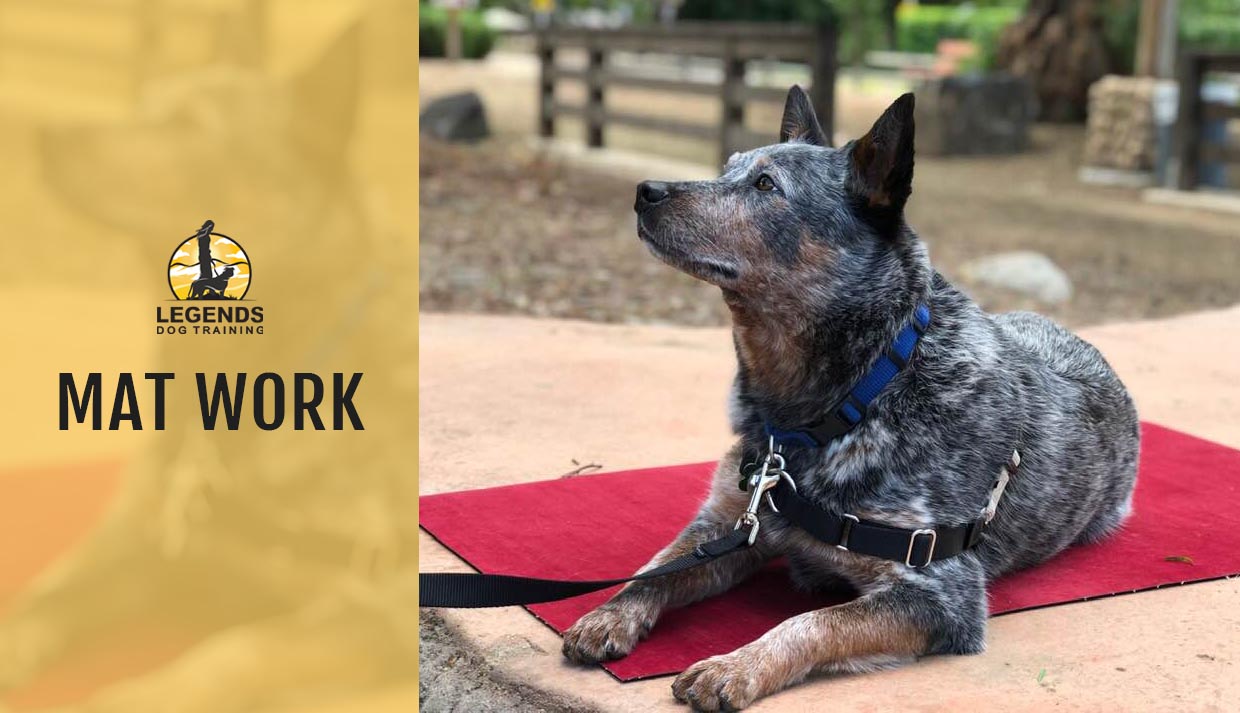
Mat Work
For dogs whose appetite is tied to chronic stress or overarousal.
Full Video Transcript
Want the structured version of this?
For dogs whose appetite is affected by stress, anxiety, or fear, Mat Work teaches calm, predictable training patterns that can help reduce that ongoing state of stress. As the dog becomes more comfortable and better able to settle, a healthier appetite may begin to re-emerge. These same skills can also help with a range of other behavior challenges. It's the first course in the Base Training Method™.
Explore Mat Work →More Help Like This, When You Need It
You came here for one problem. Join the list to hear about new free guides as they're published.