Create Space
Teach your dog to move away from triggers that cause stress. Encourage them to move away with you or to the training mat. Be generous, reinforce with food scatters or a high rate of reinforcement the moment you notice your dog turns toward you.
Avoid Forcing Sits and Downs
Set 1 should focus on creating enough space for your dog to check in and take food. Reinforce in a standing position unless your dog seems more comfortable sitting. Forcing sits or downs in stressful situations can raise stress levels or build frustration.
Decompression Time
Stress hormones like cortisol and adrenaline stay in your dog's bloodstream even after the trigger is gone. Train for 4 sets, then end high-stress sessions with a calm walk or by sitting in the garden for 5–10 minutes.
Sniffing, Licking and Chewing
After a challenging session, scatter treats in a blanket, spread peanut butter on a LickiMat, or give your dog a special chewy. These are effective ways to help your dog decompress and relieve residual stress.
Training Plan
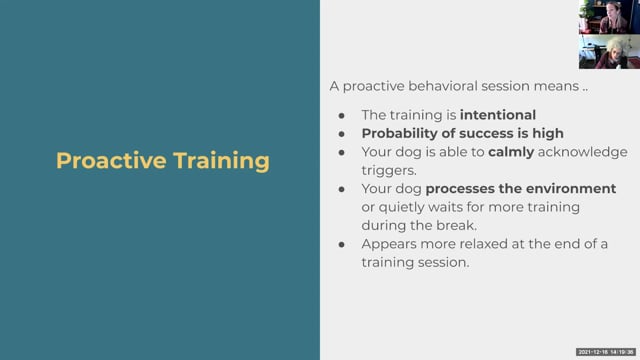
Plan daily mat work sessions that provide a high probability of success. On a scale of 1–5, your dog should be a 4 or 5. Avoid repeating sessions where your dog is a 3 or less. If they have a challenging session, follow it up with a couple of easy sessions.
If you do 5 sessions in a week, 4 should be proactive and 1 recovery. Keep the training mat out throughout the day with food pre-cut. If your dog is still agitated after 4 sets, give them a LickiMat or a calm walk. Train past the point your dog is calm.