Loose Leash Walking: Why Dogs Pull and How to Fix It
Loose leash walking depends on more than teaching a dog where to position their body. A dog also needs to be calm enough to process what is happening around them, stay connected to their person, and make thoughtful choices as the environment changes.
For many dogs, pulling is a sign that the outside world is simply moving faster than they know how to handle.
In this guide, Alyssa Rose walks through how to build that calmer foundation first, then gradually bring those skills into more distracting environments.
In this lesson, I'll walk you through why dogs pull and how I build a calmer foundation for loose leash walking.
Subscribe on YouTube- Pulling often means the environment is moving faster than your dog can handle.
- Longer or faster walks usually don't help an overstimulated dog.
- Use a standard six-foot leash with enough slack to avoid constant tension.
- Start somewhere easier, where you're not trying to get from Point A to Point B.
- Quieter outings and intentional backyard time can meet your dog's needs while you build skills.
- Use a long line only in quiet areas, for dogs with relatively mild pulling.
Start by understanding what is driving the pulling, then build calm engagement in easier environments before gradually expanding into more challenging walks.
Walks bring a huge amount of information at once. Smells, people, dogs, bikes, wildlife, traffic, sounds, and movement can all compete for your dog's attention.
Some dogs respond by becoming highly excited. Others become overwhelmed or stressed. In both cases, they may have a harder time accessing skills they know perfectly well in easier situations.
This is also why simply making the walk longer or faster does not necessarily improve leash pulling. If the dog is already overstimulated, adding more distance, speed, or exposure can leave them even more activated.
Before expecting polished leash skills, build a foundation where the dog can notice what is happening around them, stay engaged with you, and return to a calmer state.
That calm, cooperative foundation is what eventually carries over onto the leash.
Equipment matters because the dog is learning from the feeling of the leash every time you walk.
If the leash is constantly tight, the dog gradually becomes accustomed to that pressure. Once tension becomes the normal background feeling of the walk, it loses its usefulness as information.
I usually prefer a standard six-foot leash with enough slack that the dog is not continuously leaning into pressure.
When the dog does reach the end of the leash, that moment can become part of the training. You can stop and wait for the dog to check back in, or change direction and reinforce once the dog begins moving with you again.
Pay attention to the moment the leash changes from tight back to loose. That is the response you want the dog to become more aware of.
With repetition, many dogs begin to feel that tension and check in almost as if they are asking, "What's up?"
Short and retractable leashes
A very short leash often keeps the dog under almost continuous restraint. Holding the dog tightly beside you may control their position temporarily, but it does not teach them how to work through the excitement or stress that caused the pulling.
Retractable leashes also maintain some degree of tension much of the time, which can make it harder to teach the dog that leash pressure is a meaningful cue to slow down and reconnect.
A six-foot leash is usually the best place to begin.
Start somewhere where you are not committed to getting from Point A to Point B.
A driveway, backyard, quiet area in front of the house, or low-traffic park can all work well. These spaces make it easier to change direction, pause, work on check-ins, and respond to what your dog is doing instead of feeling pressured to complete a route.
The actual training area may only be a small stretch of space. You might move back and forth, change directions frequently, or spend part of the session working almost entirely in one spot.
At this stage, the goal is engagement and learning, not mileage.
It also helps to train when you are not rushing. If you only have enough time to get around the block and back, it becomes easy to abandon the training once you are running late and simply let the dog pull the rest of the way home.
Choose easier outings
If neighborhood walks are currently too stimulating, that does not mean your dog needs to stop getting outside.
You might drive to a quieter trail or open space where your dog has more room to sniff and explore. Dirt and grass surfaces often encourage a slower, more exploratory style of movement than a busy sidewalk.
Let your dog's behavior tell you whether the environment is actually helping. A trail that seems peaceful to us may still be overwhelming to a particular dog.
Look for a dog who can sniff, explore, check in with you, and move through the environment without constantly hitting the end of the leash.
Also notice what happens afterward. If your dog comes home and can rest and settle, that is useful information. If they return home wired or unable to come down, the outing may have been more stimulating than it appeared.
Use the backyard intentionally
The backyard can also provide a surprising amount of enrichment.
Your dog may be hearing neighbors, dogs barking in the distance, trucks on the street, birds, wildlife, and countless smells that we barely notice.
Spend some quiet time outside with your dog and reinforce them for checking in with you around those everyday distractions. This can be informal, or you can incorporate short training exercises.
You are teaching the dog that they can notice activity in the environment and still stay connected to you.
That one habit can have a positive ripple effect. The same check-in skills can support loose leash walking, recall, and calmer behavior around the yard.
If your dog tends to patrol or bark along the fence line, see How to Stop Your Dog From Barking at the Fence.
Using a long line
In quiet, low-traffic environments, a 10- to 15-foot long line can also be useful for some dogs. The extra space can reduce how often the dog reaches the end of the leash and give them more freedom to sniff and explore.
A long line works best for dogs with relatively mild pulling who can still respond to their person. If the dog is repeatedly hitting the end of the line, highly reactive, biting the leash, or leaving the handler feeling out of control, build stronger foundation skills first.
We do not want to simply transfer pulling from a six-foot leash to a fifteen-foot leash.
Stay focused on your dog when using a long line and use it only in environments where you have enough space to handle it safely.
Loose leash walking gets easier when your dog can notice the environment, stay thoughtful, and still check back in with you.
The leash skills matter, but they are built on that calmer ability to move through the world together.
Why does my dog pull on the leash?
For many dogs, pulling is a sign that the environment is asking more of them than they currently know how to handle.
You may see them pull forward, stop checking in, pant, scan, or become intensely focused on whatever is ahead.
Slowing things down and practicing in an easier environment can help the dog learn how to process those distractions while staying connected to you.
Will longer or faster walks help my dog stop pulling?
Usually not. If your dog is already overstimulated, adding more distance or speed can leave them even more activated.
Instead of trying to exhaust the dog, focus on helping them move through the environment in a calmer, more thoughtful way.
What's wrong with a short or retractable leash?
Short and retractable leashes can keep some degree of tension on the dog for much of the walk.
When leash pressure is always present, it becomes harder to use that pressure as meaningful information.
A standard six-foot leash usually gives you enough room to create slack while maintaining good control.
How far should I walk my dog while working on this?
You do not need much distance to practice loose leash skills.
A driveway, backyard, area in front of the house, or another relatively easy environment may be enough. You might work within a 25- to 50-foot area, moving back and forth, changing directions, or practicing stationary check-ins.
The goal is successful repetitions, not completing a route.
How can I meet my dog's needs if we temporarily scale back neighborhood walks?
You can still provide plenty of enrichment through quieter outings, intentional backyard time, search games, training, and, for the right dog, a properly handled long line in a low-traffic area.
Pay attention to whether the activity leaves your dog calmer and more settled afterward or increasingly wired and overstimulated.
Can I use a long line for loose leash walking?
A long line can be useful for dogs with relatively mild pulling in quiet, low-traffic environments.
If your dog is repeatedly hitting the end of the line, highly reactive, or difficult to control, build stronger foundation skills first.
Stay engaged with your dog and learn how to handle the extra length safely.
Harness
Part of the equipment that shapes how a dog experiences pressure on a walk. See it in the shop →
Six-Foot Leash
Gives you enough room to keep slack in the leash so tension stays meaningful information instead of a constant background feeling. See it in the shop →
How to Stop Your Dog From Barking at the Fence
Fence barking and leash pulling can involve a similar challenge: the dog becomes highly focused on sights, sounds, and smells in the environment. This video shows how to build calmer responses around those everyday triggers.
How to Calm a Reactive or Overstimulated Dog
If your dog carries excitement or stress from one trigger into the next, this video shows how to help them settle, recover, and return to a calmer baseline.
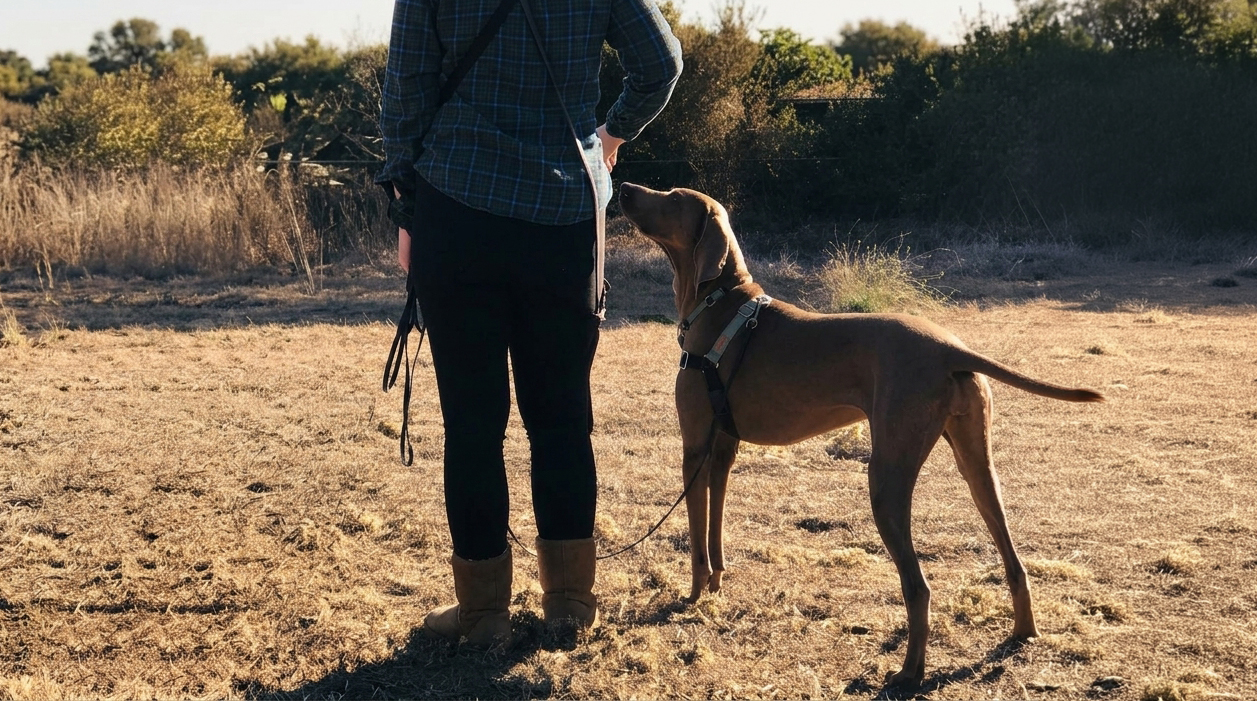
Heel Work
Build the calm, connected walking skills introduced in this guide with a more structured training progression.
Full Video Transcript
Want the structured version of this?
If you want a more structured way to work through leash pulling, Heel Work takes these same ideas and builds them into a step-by-step training progression.
The exercises begin in easier environments so your dog can learn how to move with you, respond to leash tension, check in, and stay connected before harder distractions are added.
As the training progresses, you gradually bring those skills into more realistic situations. Your dog learns how to notice what is happening around them without becoming completely absorbed by it, and how to reconnect with you when something catches their attention.
Heel Work is part of the Base Training Method™ and is especially useful for dogs who need more help staying calm and thoughtful while moving through the world.
Explore Heel Work →More Help Like This, When You Need It
You came here for one problem. Join the list to hear about new free guides as they're published.