Kids and Dogs: How to Build a Safe, Positive Relationship
Many dog bites involving children happen at home with a familiar dog, which means there are often opportunities to prevent problems before they happen.
In this guide, Alyssa Rose walks through how to teach kids to read dog body language, interact more calmly and respectfully, and use simple games to build trust and better communication with dogs.
In this lesson, I'll walk you through how to teach kids to "speak dog" and the games that build real trust at every age.
Subscribe on YouTube- Teach kids how dogs say "yes, please" and "no, thank you."
- Not all dogs want to be petted. Respect a dog's choice to move away.
- Reading aloud and search games build trust without physical contact.
- Use age-appropriate games that teach kids to invite the dog into their space.
- Give your dog a clearly defined resting area where they won't be approached.
- Toddlers and young children should always be actively supervised around dogs.
From reading body language to age-appropriate games.
One of the first things I recommend is teaching kids how dogs say "yes, please" and "no, thank you."
Sit on the ground with a mix of lower-value and higher-value foods. Include a few things you think your dog may not care much about and a few things you expect them to really enjoy. You can also do the same exercise with toys or other objects.
Invite the dog to approach and pay attention to what happens next. This gives kids a simple way to start recognizing whether the dog is comfortable engaging or would rather move away.
Yes, please
- Ears forward
- Bright, interested eyes
- Approaching willingly
- Eagerly taking food or a toy with little hesitation
No, thank you
- Looking away
- Hesitating
- Moving away
- Refusing the item
- Taking it politely and then dropping or spitting it out
Petting
Not all dogs want to be petted, and some dogs are very particular about where and when they enjoy physical contact.
If a dog turns their head away, backs up, licks their lips, pulls their ears back, tucks their tail, or shows other signs of uncertainty, teach kids to respect that response.
It should not be taken personally. It may simply mean that the dog would be more comfortable interacting in a different way, such as playing a search game, walking together, or simply sharing the same space without physical contact.
Reading to your dog
Reading aloud to a dog can be a calm, low-pressure bonding activity, particularly for nervous or excitable dogs. It also gives kids an opportunity to practice reading while spending time with the dog without placing any physical demands on them.
Search games
Have your dog wait on a training mat or platform while your child hides a high-value piece of food or a favorite toy.
If the dog does not yet have a reliable wait or stay, a parent can hold the dog on a harness and leash while the child hides the item.
Once the child is ready, they can release the dog with "find it" and encourage them to search.
Ages 3 to 5: Hopping Lily Pads
Poly Spots are flat colored markers often used in children's athletic programs. If you do not have them, something simple like paper plates can work too, as long as your dog is unlikely to pick them up.
Place several spots on the floor. Have your child move to one spot at a time and place a piece of food on the ground beside them.
The dog learns to approach the child's location, while the child practices inviting the dog into their space rather than moving directly toward the dog.
For very young children, placing the food on the ground is often easier and safer than asking the dog to take food directly from the child's hand.
Ages 6+: Moving exercise
Set several Poly Spots in a line, spaced a few feet apart. Have your child walk from one spot to the next, pausing at each one to place food on the ground or reinforce the dog for stopping with them.
This begins to teach the dog to move calmly alongside the child and gives the child practice using slower, more predictable body language.
Over time, those same skills can carry over into walking together.
Other age-appropriate games
Training can also be turned into simple games that are fun and low pressure for both the dog and the child.
For example, the child can hide while the dog searches for them, then reward the dog when they are found. That same game can eventually become a playful way to practice recall.
Mat Work, search games, and other basic skills can all be adapted based on the child's age and confidence level.
Dogs also need places where they can rest without being approached or interrupted.
Baby gates are often especially useful in homes with young children because they create a clear boundary that young children are less likely to climb into or interact with compared with a crate or exercise pen.
Toddlers and young children should always be actively supervised around dogs. This protects the child, but it also protects the dog from being placed in situations they may not know how to handle comfortably.
Many dog bites are predictable and preventable when we pay attention to the dog's behavior and teach children how to interact in a calm and respectful way.
We want kids to learn how to recognize when a dog is comfortable, when they need space, and how to invite interaction rather than force it.
At the same time, we want dogs to learn how to feel calm and comfortable around children.
Those skills take time, but the relationships that can grow from that work are incredibly valuable.
Why is it important to teach kids how to interact with dogs?
Learning how to interact with dogs is a valuable skill for children. It teaches them to notice body language, respect boundaries, and understand that another individual may not always want the same kind of interaction they do.
On the dog's side, we also need to take signs of stress seriously. Dogs may tolerate uncomfortable interactions for a long time before eventually reaching their limit.
Teaching both sides of that relationship early can create safer interactions and stronger, more trusting relationships over time.
How can kids learn to read dog body language?
The "yes, please" and "no, thank you" exercise above is a great place to start, but there are teaching opportunities throughout everyday life.
You might notice body language during a walk, at the vet, when visiting a dog that belongs to a friend or family member, or even in a dog you simply see in passing. If a dog is tucking their tail, pulling their ears back, widening their eyes, turning their head away, or suddenly disengaging to chew on a stick or sniff the ground, pause and talk about what the dog might be communicating.
Helping kids notice these stress signals in different situations can make dog body language much easier for them to understand over time.
Do all dogs like to be petted?
No. Not all dogs want to be petted.
Some dogs may also be very specific about where they enjoy being touched. For example, a dog may enjoy being scratched on the shoulder or chest but dislike being petted on top of the head.
A dog's preferences can also change depending on the situation, location, and person.
If a dog turns away, backs up, tucks their tail, or shows other signs of stress or uncertainty, teach kids to respect that response. There is no need to try to win the dog over. Choose another activity the dog may feel more comfortable with instead.
What activities help kids and dogs build trust?
Reading aloud can be a calm, low-pressure way for a child and dog to spend time together.
Search games are another good option because they build engagement without requiring physical contact.
Age-appropriate training games can also be very helpful. Younger children can use Poly Spot games to practice inviting the dog into their space, while older children can work on moving exercises, recall games, and simple search activities.
The goal is to make the interaction fun, predictable, and low stress for both the dog and the child.
How do I give my dog a break from my kids?
Create a clearly defined resting area where the dog can relax without being approached.
Baby gates are often especially helpful with young children because they create an obvious boundary while still allowing the dog to remain connected to the household.
Teach children that when the dog is in that resting area, they leave them alone.
Training Mat / Platform
Used as a wait or resting spot for search games and as a foundation for some of the training exercises shown in the video. See it in the shop →
Poly Spots
Used for simple age-appropriate games that teach kids to invite the dog into their space and practice calm movement together.
Harness & Leash
A safe backup for search games and training exercises when a dog doesn't yet have a reliable wait or stay. See it in the shop →

How to Stop Your Dog From Jumping
Helpful for dogs who become overly excited around children or visitors.
Puppy Biting and How to Stop It
Especially useful in homes with kids and mouthy young dogs.
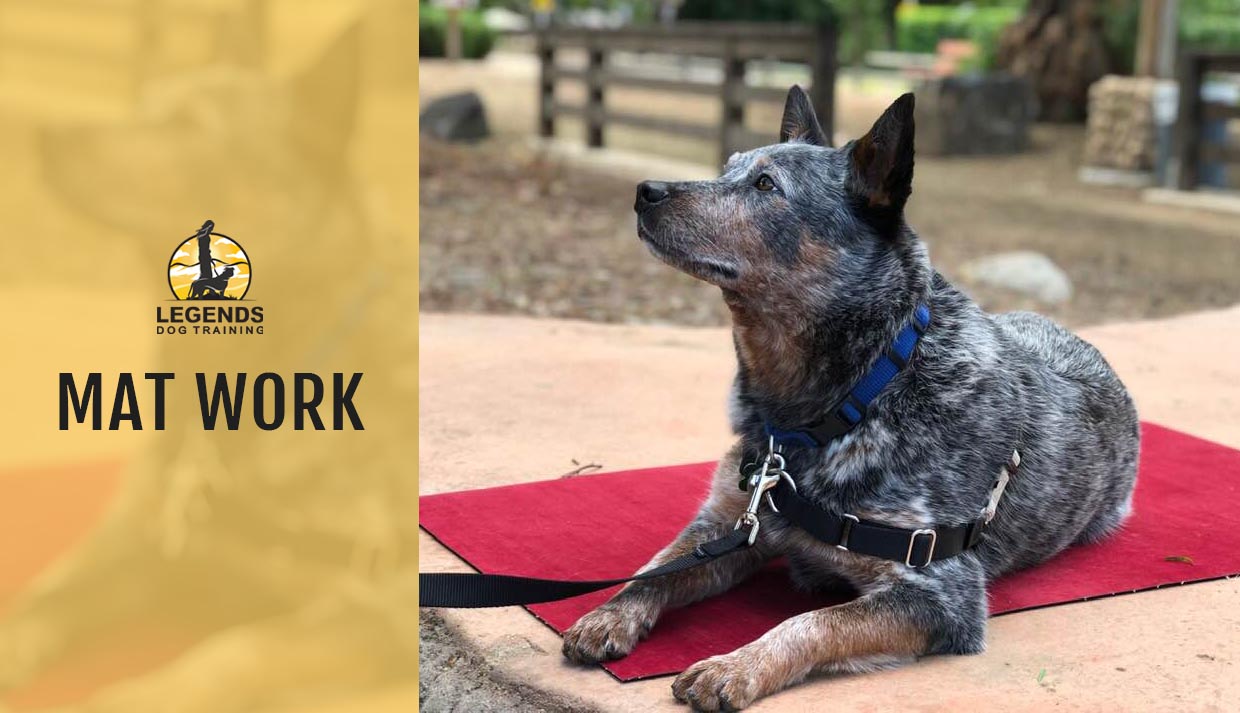
Mat Work
A foundation for helping dogs settle, communicate, and work calmly around children.
Full Video Transcript
Want more structured help with your dog's behavior?
Mat Work can be especially useful for dogs who live with or spend time around children. It helps dogs learn how to settle, reconnect with their person, and move away from situations that may feel overwhelming.
The mat can also become a clear, concrete boundary for kids. Children can learn that when the dog is resting on the mat, they give them space rather than approaching or petting them.
You can also incorporate the mat into games. For example, the dog can wait on the mat while a child hides a toy or piece of food, then be released to search.
In some situations, the mat can give the dog another choice. They can approach the child if they feel comfortable, or remain on the mat instead. If the dog begins to look uncertain, Mat Work also gives you a familiar way to help them move away and settle.
Those skills help build two things that are especially important around children: calmer behavior and clearer communication.
Explore Mat Work →More Help Like This, When You Need It
You came here for one problem. Join the list to hear about new free guides as they're published.