

Board-and-Train Overview
These training programs are designed to promote calm, focused, well-regulated behavior in your dog. You have the option for a 2-6 week board and train. Below you will find details about what can be covered given the length of your dog’s stay. Each week of training creates a positive progression in learning, ensuring your dog develops foundational skills before advancing to more complex behaviors and training goals.
Two-Week Board and Train
Foundation and Framework for Behavioral Work
$3,500 for 14 days
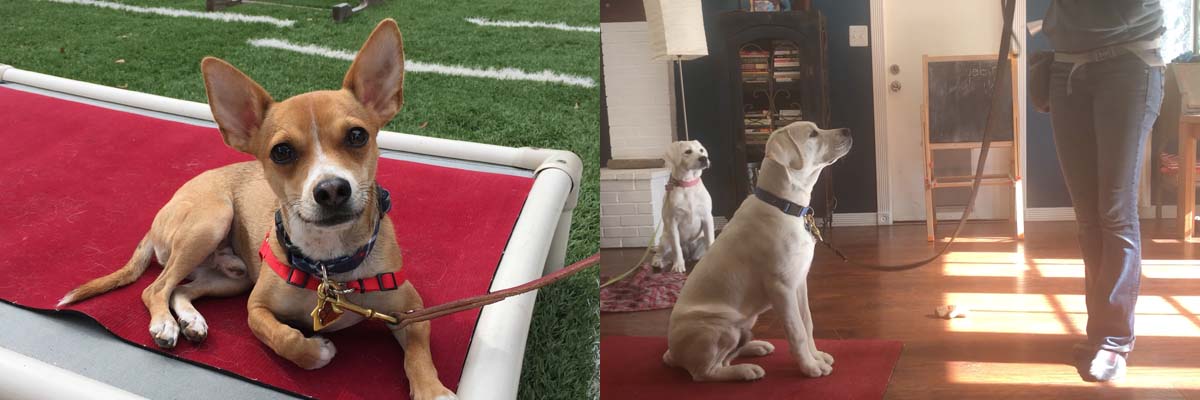
The initial focus in training is aimed at establishing calming exercises on a training mat. These Mat Work exercises serve as the cornerstone of the training, establishing focus, relaxation, impulse control while building an aptitude for learning and connection.
Puppies and/or highly toy motivated dogs will also engage in structured games that provide healthy outlets for their natural energy. These games are designed to support key behavioral goals, such as emotional regulation, trust, communication and thinking through high stimulation scenarios. By using toys in training, your dog will have a fun and productive way to channel their energy while building important skills related to their behavioral well-being.
As your dog begins to demonstrate fluency these exercises can then be used to regulate emotional responses related to behavioral challenges in the home. For example, learning to be calm and relaxed with separation, people, outside sounds, activities or with other resident animals. Mat Work exercises can also be used for dogs that resource guard by building trust and communication when your dog is in possession of valued resources (ie. food, toys or socially significant space).
During this time the trainer would observe and identify your dog’s individual needs on a day to day basis to make more customized recommendations for management and training. These skills can then be transferred and implemented in your dog’s home environment for continued growth.
Three-Week Board and Train
Relaxation and Connection with Real-World Integration
$4,620 for 21 days
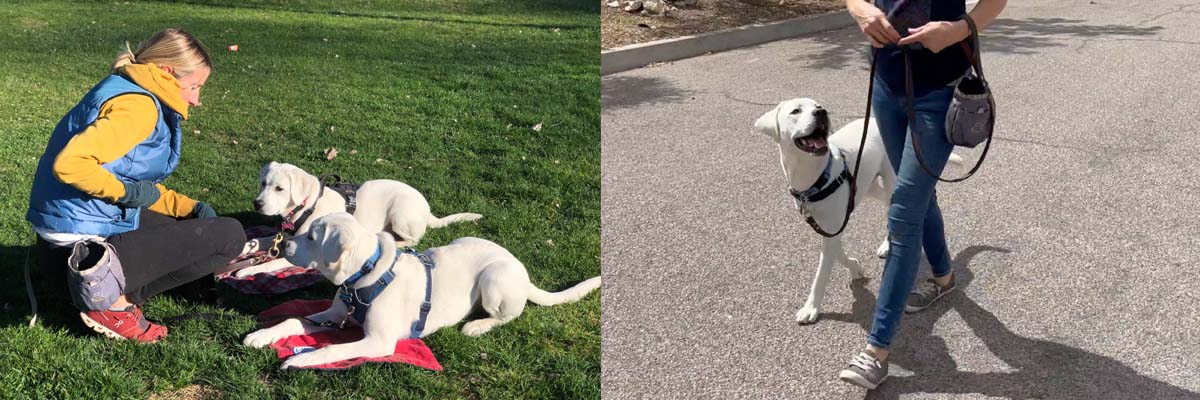
This 3-Week program allows for the same strong foundation of calm, focused, controlled behavior described above. The third week of training would then begin the process of expanding calm, focused, controlled behavior to the outside environment through Heel Work. Heel Work helps generalize this calm connection to situations where a mat is not available. This will help your dog to be calm and confident at your side when distractions or challenges are present.
Heel Work training starts in a low level distraction environment (the living room and/or yard) and gradually builds to higher levels of difficulty as your dog shows readiness.
This third week of training would also allow time for Mat Work to be generalized to novel environments, like the park or a cafe, where your dog would be exposed to new sounds and sights. This lays the groundwork for building calm, confident behavior in different contexts.
In addition, the trainer’s careful observation of your dog’s behavior patterns within the home, and as your dog is exposed to new environments, will allow for recommendations that will support your dog’s long-term growth and well-being.
Four-Week Board and Train
Expanding Training to New Horizons
$5,880 for 28 days
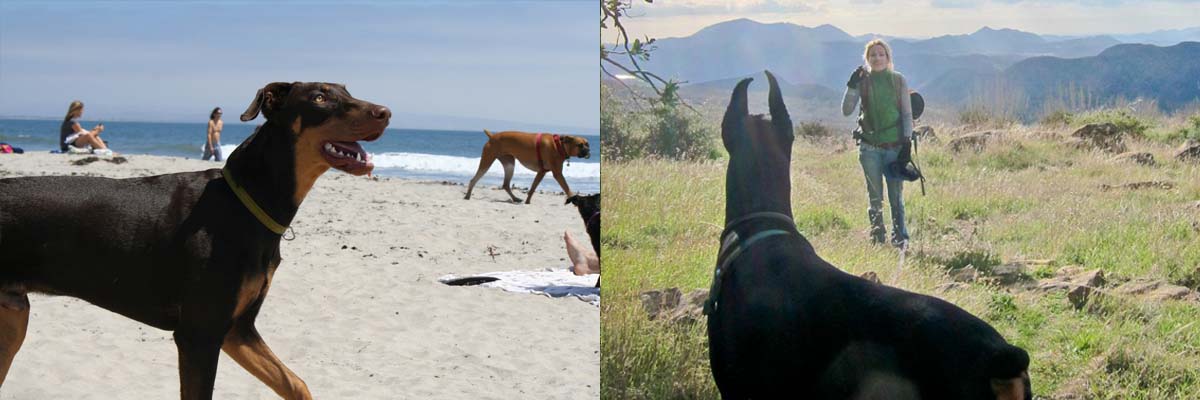
The 4-week program offers a comprehensive training plan. This allows time to deepen development of skills related to emotional regulation, including calming exercises within or around the home, systematic exposure to triggers or distractions outside the home and training that improves recovery. Recovery training will teach your dog how to come back to a calm baseline more readily if or when they become stressed, excited, frustrated or guarded.
In week 4 your dog will be introduced to Recall training to help your dog learn to come away from high-arousal distractions and return to you when called. When practicing recall your dog will be learning to return to their training mat or to your side (heel position) to teach your dog to settle as needed. As with any skill set the training begins with manageable distractions and gradually builds to higher levels of difficulty as your dog shows readiness.
By integrating Recall with Mat Work and Heel Work, your dog’s learning becomes scaffolded, building a cohesive set of skills that reinforce one another. This layered approach not only sets the stage for calm, focused behavior but also creates a foundation that will sustain itself over time. This will give both you and your dog confidence when faced with real-world challenges.
This fourth week would also allow time for your dog to practice their new found skills in natural environments or through enrichment activities that highlight your dog’s natural strengths. The selected activity would align with your dog’s age, physical, behavioral and developmental needs.
Five-to-Six Week Board and Train
Behavioral Therapy: A Path to Transformation
$7,000 – $8400 for 35 -42 days
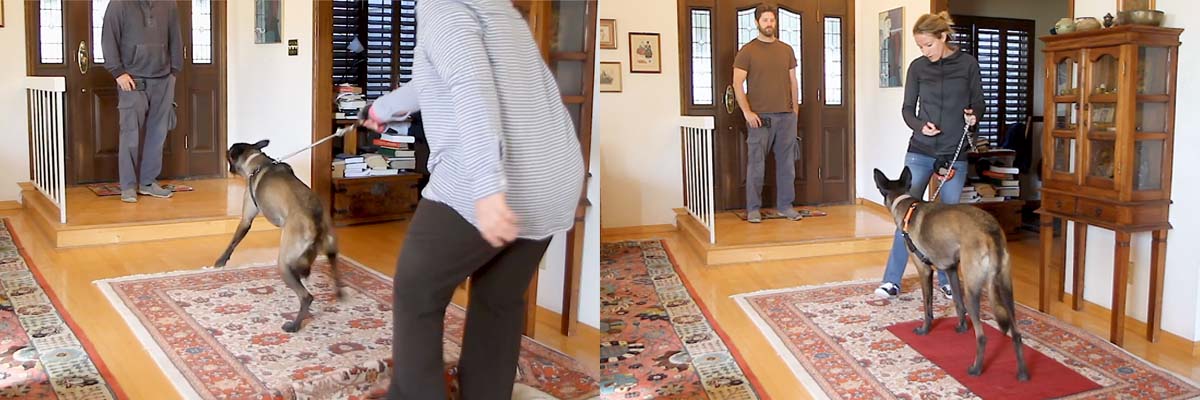
A longer duration of training is highly recommended for dogs that exhibit more severe anxiety, fear, reactivity, hyperactivity, or aggression. This extended stay allows for the time necessary to reset, rebuild, and heal, providing a more comprehensive and therapeutic approach to addressing deeply rooted behavioral issues. During this time, your dog will receive consistent support and training. They will learn foundational skills covered in the 2-4 week programs, but with a stronger emphasis on establishing a calm baseline. This calm foundation is crucial for optimizing learning and growth, particularly as we begin to gradually and systematically integrate the training into situations that may be triggering for your dog.
Throughout the extended stay, your dog will learn and practice healthier coping strategies that enable them to manage stress, frustration, and arousal more effectively. These new skills will help transform day-to-day challenges into opportunities for connection and understanding, rather than points of conflict or frustration.
This extended training period provides the necessary time and space for your dog’s nervous system to reset, while giving them the tools they need to face real-world challenges with confidence. By the end of the program, you will see significant progress in your dog’s behavior, setting a clear path for a healthier, happier, and more harmonious life at home.
What to Expect
Individualized Training: Your dog will receive expert, one-on-one training designed specifically for their unique needs in the home of a behavior specialist. This personalized approach ensures a solid foundation while directly addressing any specific challenges. Working in a focused, controlled environment, the training will be gradually built up with increasing distractions, providing the right level of support at every stage to set your dog up for lasting, positive behavioral change.
Go-Home Session: At the end of your dog’s stay, there will be a Go Home Session. This session can be done in person at pick-up, or we can arrange a Zoom session 1-2 days before your dog returns home. During the Go Home Session, we’ll have a detailed discussion about the training progress and next steps. Some owners prefer the Zoom option as it allows for a more focused conversation in a quiet, distraction-free environment. The time and location of this session needs to scheduled prior to your dog’s board and train.
Follow-Up Support: In addition to the Go Home Session at pick-up, each dog will receive a follow-up session for every week of training beyond the initial two weeks. For example, if your dog stays for three weeks, you will receive one follow-up session. If your dog stays for four weeks, you will receive two follow-up sessions. These follow-ups help ensure a smooth transition and continued progress as you implement the training at home. Follow up sessions are one-hour in length and are conducted by zoom. The focus of these sessions will be how to maintain and effectively use foundation skill sets to work through real world challenges.
Continued Growth: Practicing the training for just 10 minutes once or twice a day after your dog returns home will lead to exponential growth in their behavior. These brief, consistent sessions will help reinforce learned skills, while also enhancing your connection and communication with your dog. The more consistent you are with routine practice, the more confident your dog will become in offering desired behaviors with real world challenges.
FAQ’s
Is there anything I can do to prepare for the board and train to ensure optimal results?
Feeding Routine
Yes! To set your dog up for success, watch this video about feeding routines and how they can positively impact behavior and training. Start implementing these practices before the board and train begins. Meals are frequently incorporated into training sessions, so establishing a healthy feeding schedule in advance is essential. If your dog arrives only eating rich foods and rejecting nutritionally complete meals, much of the first week will be spent addressing this, which can delay progress in other training areas. Preparing ahead ensures your dog is ready to focus and thrive during their training.
Conditioning Calm Behavior with Crate and/or Exercise Pen
Creating calm, positive associations with the crate and/or exercise pen is extremely helpful in preparing your dog for the board and train program. These areas should be places that promote rest, relaxation, and serve as a source of safety and security. To help establish this, I’ve provided videos on how to create positive crate and pen experiences. If these associations aren’t already in place, some of the initial training will focus on helping your dog become comfortable with these spaces. This is important for reducing stress, anxiety, and frustration that can interfere with learning, especially when adjusting to a new environment.
If your dog experiences anxiety related to confinement, please let the trainer know in advance, as this will be factored into the training schedule. Ensuring a smooth transition into the crate or pen will set your dog up for success and create a more effective training experience.
My dog pulls and reacts to other dogs on leash, what can I expect from the training?
Compulsive pulling and leash reactivity are often the result of high levels of stress or arousal. Mat Work and Heel Work are designed to create a calm, focused connection between you and your dog, which can have an immediate, positive impact on leash behavior for many dogs. However, some dogs may need more time for these changes to take hold as their neural pathways “rewire” and their stress responses diminish. In such cases, the training will be customized to your dog’s specific needs, and you will receive recommendations for management and training that will support their ongoing progress at home.
My puppy or adult dog is struggling with potty training. Will the board and train program resolve this?
Steady progress with potty training can be made with a combination of a consistent routine, good management, and training that helps your dog learn to mentally and physically regulate this natural process. On-going challenges in potty training are often linked to stress, over-arousal, or an inconsistent schedule. A puppy or dog that is chronically stressed or overstimulated may develop an urgency to urinate more frequently. Relaxation exercises will help to minimize this urgency so that your dog is learning to “hold it” for longer stretches of time. In addition to relaxation training – a structured daily routine will also be a key component of success. If potty training is a genuine challenge for your puppy or dog (beyond the normal progression of learning) a 3-4 week board and train program would be most ideal in build lasting habits. To transfer these skills back home, you will need to follow training guidelines to ensure the training generalizes to your home environment.
My dog has separation anxiety, is this something that can be resolved in a board and train program?
Separation anxiety is the result of unregulated stress related to separation. In many cases separation anxiety is exacerbated by other factors as well. For example, if a crate or exercise pen is used for separation before the dog feels calm and relaxed within that space – this will likely contribute to separation issues. Dogs that are sensitive to environmental sounds and activity are also more prone to separation anxiety, as these sensitivities generate chronic stress that lowers a dog’s tolerance to being left alone. Dogs exhibiting separation anxiety require more intensive care and a carefully structured routine that minimizes the amount that your dog is rehearsing anxious behaviors. The goal in separation anxiety training is to help your dog feel safe and confident, while teaching coping strategies that are conducive with being calm. Mat Work is a critical component of separation anxiety training as the training mat can become a source of safety and security in your absence. If your dog experiences separation anxiety and you choose to enroll them in a board and train program, addressing your dog’s separation anxiety and other contributing factors (crate training, desensitization and counter-conditioning to outside sounds and activities) would become a primary focus in training. While some dogs may show immediate improvement through relaxation exercises, most dogs will require more time to work through this than the board and train allows. Every dog progresses at their own individual pace. A commitment to understanding and following through with recommended management and training once your dog returns home is critical to helping a dog overcome these challenges.
My dog exhibits resource guarding, to what extent will the board and train help with this issue?
Resource guarding can manifest in different ways, and how it’s addressed depends on the specific situation. Dogs that guard resources from people often show significant improvement as communication, trust, and understanding build through training. With consistency, many dogs naturally resolve this issue over time.
However, when resource guarding is directed toward other dogs, it can be a more complex issue, often requiring a combination of relationship building, careful management, and time for neural pathways to rewire. In some cases, especially for dogs genetically predisposed to guarding behaviors, long-term management may be necessary. While training won’t always eliminate the behavior entirely, it can greatly reduce the stress and frustration associated with resource guarding, leading to a calmer dog that learns more effective ways of dealing with conflict. Training will provide strategies that help alleviate these challenges and improve overall behavior.
“I’ve tried other dog trainers…”

“Alyssa is a mix of a therapist, and a dog trainer.”

Read more ““Alyssa is a mix of a therapist, and a dog trainer.””
“Alyssa has changed our relationship with our dog for the better.”

Read more ““Alyssa has changed our relationship with our dog for the better.””
“We saw a difference after one session.”

“Alyssa has been amazing to work with.”

“Alyssa is the most competent dog person I have ever met!”

Read more ““Alyssa is the most competent dog person I have ever met!””
“Alyssa helped our pup get re-socialized with other dogs.”

Read more ““Alyssa helped our pup get re-socialized with other dogs.””
“Incredibly structured training.”

“Alyssa was so amazing, friendly, and easy to work with.”

Read more ““Alyssa was so amazing, friendly, and easy to work with.””
“I feel so much more productive when training with my dog!”

Read more ““I feel so much more productive when training with my dog!””
“Working with Alyssa fundamentally changed our relationship with our dog.”

Read more ““Working with Alyssa fundamentally changed our relationship with our dog.””
“Without Alyssa, I would have given up on my rescue dog.”

Read more ““Without Alyssa, I would have given up on my rescue dog.””
“We Trained on Skype. Incredible!”
