How to Train a Dog to Pee and Poo on Cue
To teach a dog to pee and poo on cue, reward your dog every time they go in a designated potty spot until the behavior is at least 90% predictable, then say a single cue like "go potty" as soon as your dog starts getting ready to go. For the average dog this takes about 7 to 10 days of consistent practice. Below, I walk through the full method for teaching a dog to pee and poo on command, the mistakes that slow it down, and how to troubleshoot a distracted dog.
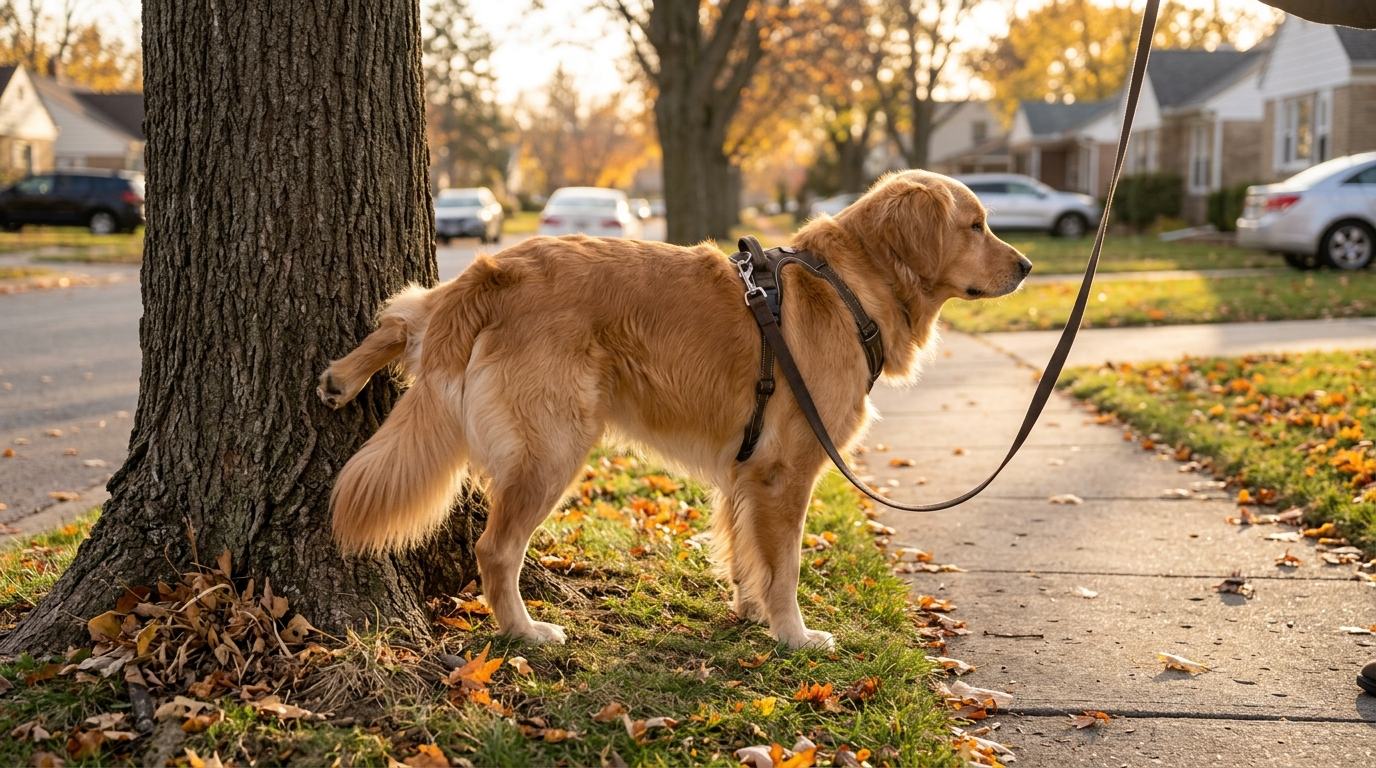
Key Takeaways
The method at a glance, before the full walkthrough below.
- Teaching a potty cue usually takes about 7 to 10 days when you follow the same routine every time.
- Reward the behavior first. Add the cue only once your dog goes in the designated spot at least 90% of the time.
- Stay quiet and still for the first two minutes so your dog can focus on going potty.
- Deliver three calm treats, one after another, within one second of your dog finishing.
- Say the cue once, as soon as you see your dog's pre-potty motions.
- Go outside with your dog every time so you can reward at exactly the right moment.
Why teach a dog to pee and poo on cue?
Life is easier when your dog knows and responds to a potty cue. It helps with:
- House training
- Cold mornings
- Rainy days
- Road trips
A potty cue lets you ask your dog to go, and your dog understands what you mean.
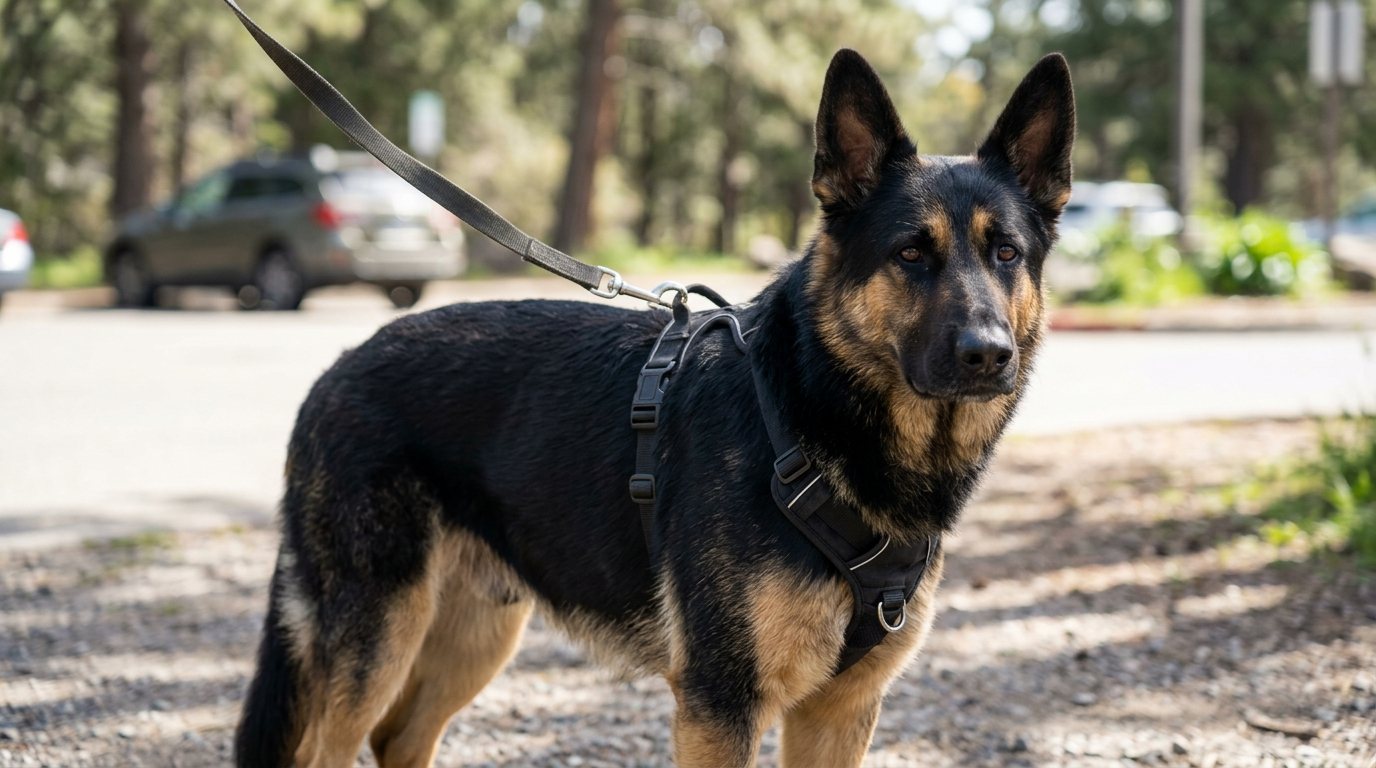
What makes a potty cue hard to teach?
The distracted dog
Your dog is busy taking in sights, sounds, and smells, and forgets to go potty. I wrote this guide for the distracted dog.
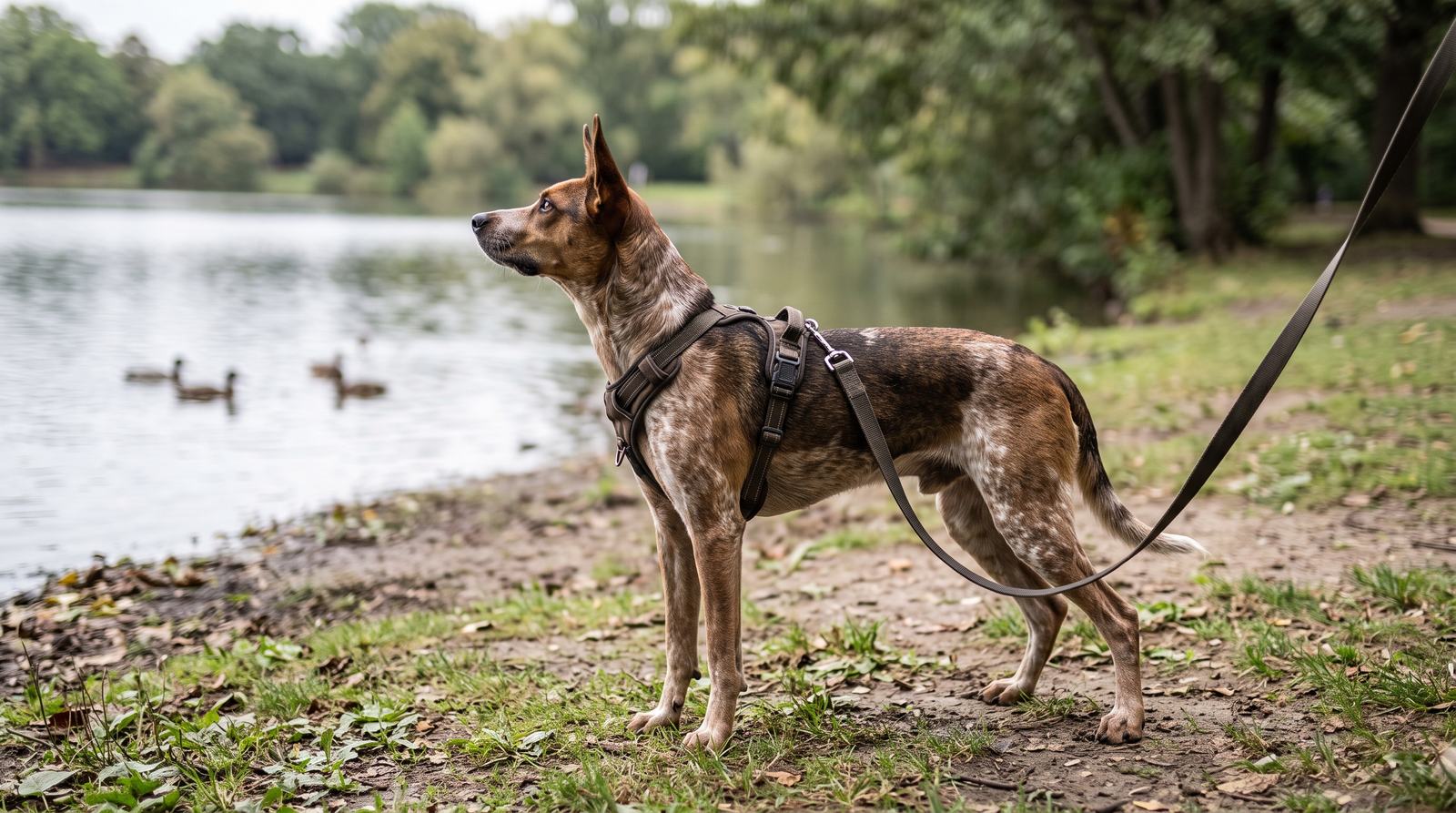
The shy dog
Your dog prefers to go potty in privacy. A dog who was scolded or physically reprimanded for going in the house can learn that it is safer to go when people are not around. Some dogs will even hold it through a two hour walk and then sneak away to eliminate in a hidden spot once they are back home.
If you think your dog is shy about going in front of you, work with a certified professional dog trainer to rebuild trust before using this method. You can reach out through the contact page to get started.
What do I need to get started?
You do not need much. These are the items I recommend to make the timing easy, and each one links to the shop if you need it.
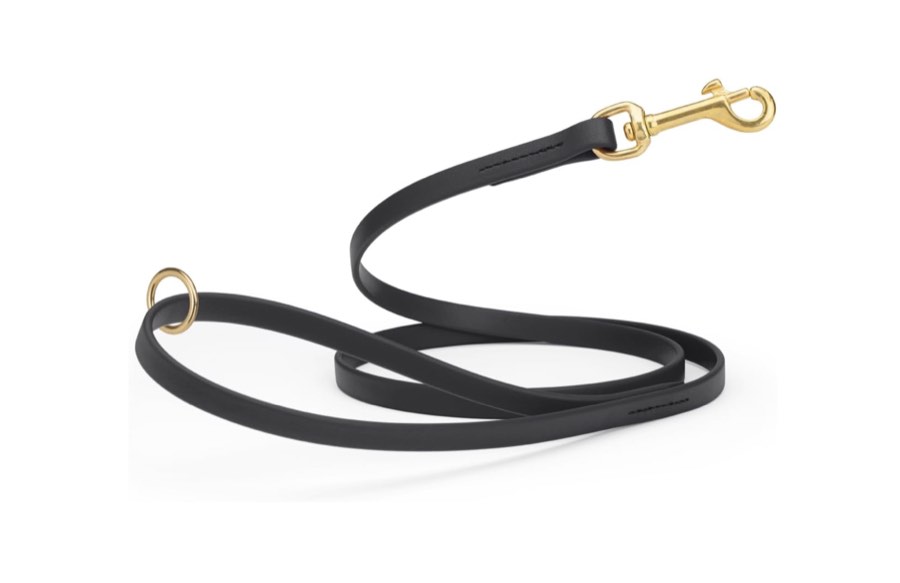
6-Foot Biothane Leash
Keeps your dog close to the potty spot so you can reward right away.
See it in the shop →
Happy Howie's Meat Roll
A soft, moist, meaty roll that most dogs love. Cut it into small pieces for quick, high-value rewards.
See it in the shop →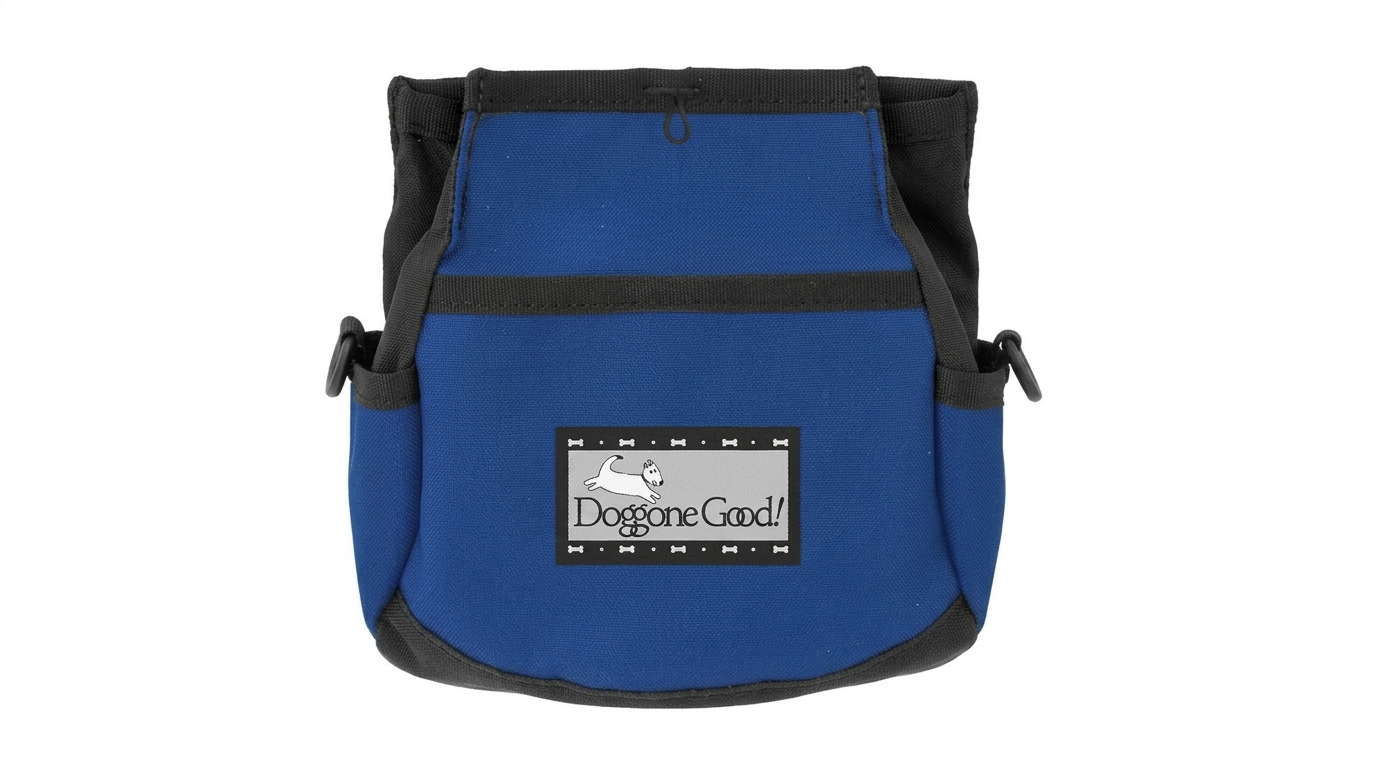
Training Treat Pouch
Opens instantly so the reward lands within a second. Skip crinkly plastic bags, since the sound is a distraction.
See it in the shop →A timer is optional, and your phone works fine. It also helps to know your dog's potty habits. If your dog always needs to pee and poo right after eating, for example, you can plan your outings around meals. A consistent feeding schedule makes those habits much easier to predict.
For these 1 to 2 weeks, block access to any doggy door and avoid letting your dog spend unsupervised time outside. Unsupervised outdoor time makes it much harder to reward at the right moment, and it slows the process down.
A potty cue works best alongside a solid house training routine. If your dog is regularly having accidents inside, start with my adult potty training guide first, then come back to add the cue.
How do I train a dog to pee and poo on cue?
I usually spend 3 to 5 days on this step before adding a cue. The goal is a reliable history of getting rewarded for going potty in the right spot.
- Go out on leash. Bring a treat pouch filled with high-value rewards and walk to your designated potty spot.
- Wait two minutes in silence. Set a timer if you have one. Do not talk, walk, or do anything that might distract your dog, so your dog can focus on going.
- Reward within one second. When your dog finishes peeing, say "good dog" in a calm tone and deliver three treats, one right after another. Wait until your dog has completely finished first.
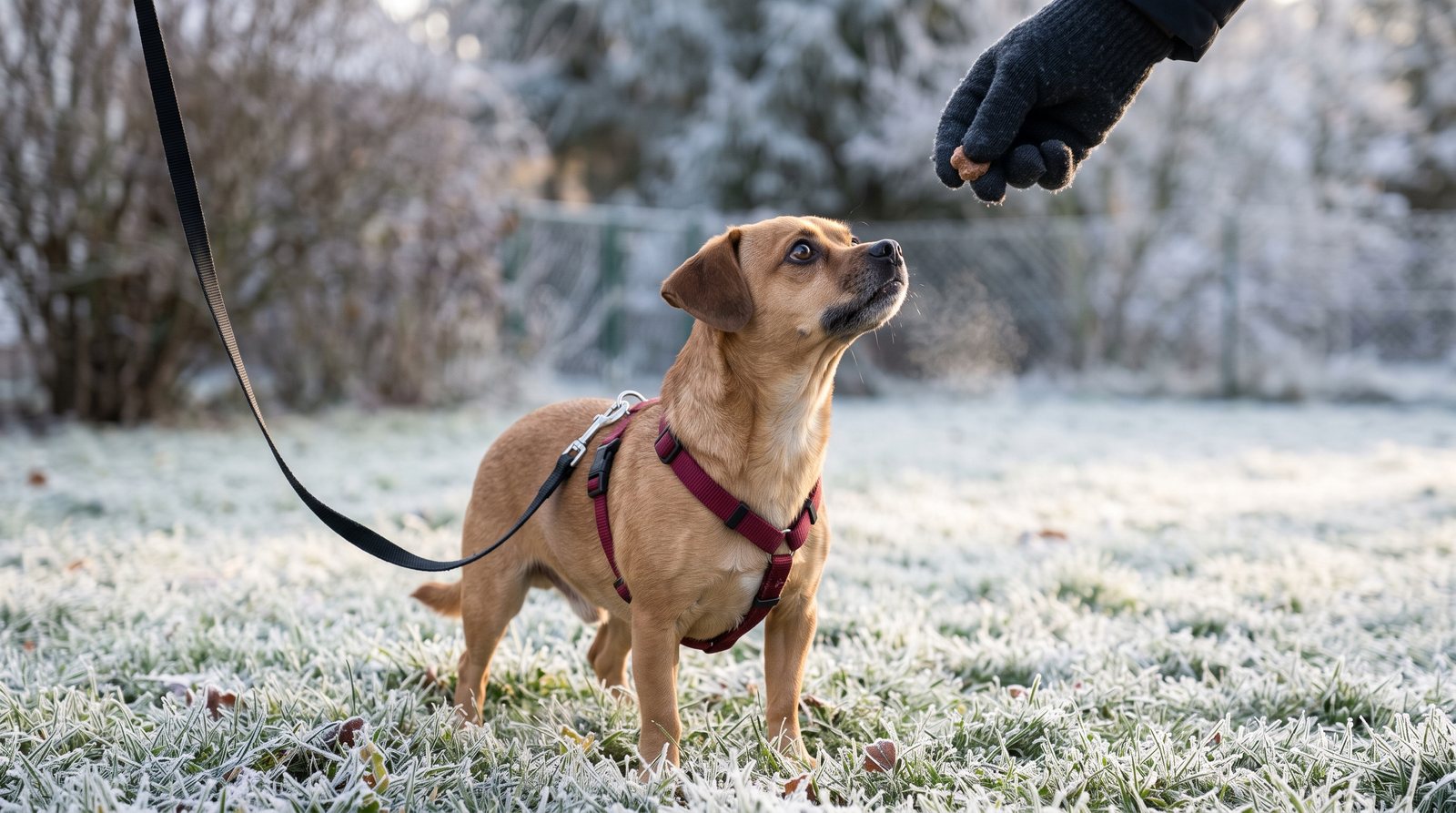
Deliver the treats right away, within one second of your dog finishing. - Stay calm. Big, excited praise can make a dog forget there is still a second job to do. If your dog poos, wait until they finish and again say "good dog" and deliver three more treats.
- Ignore the staring. After the last treat, your dog may stand and stare at you for more. Look up at the sky and cross your arms until your dog moves on.
If your dog does not go in two minutes
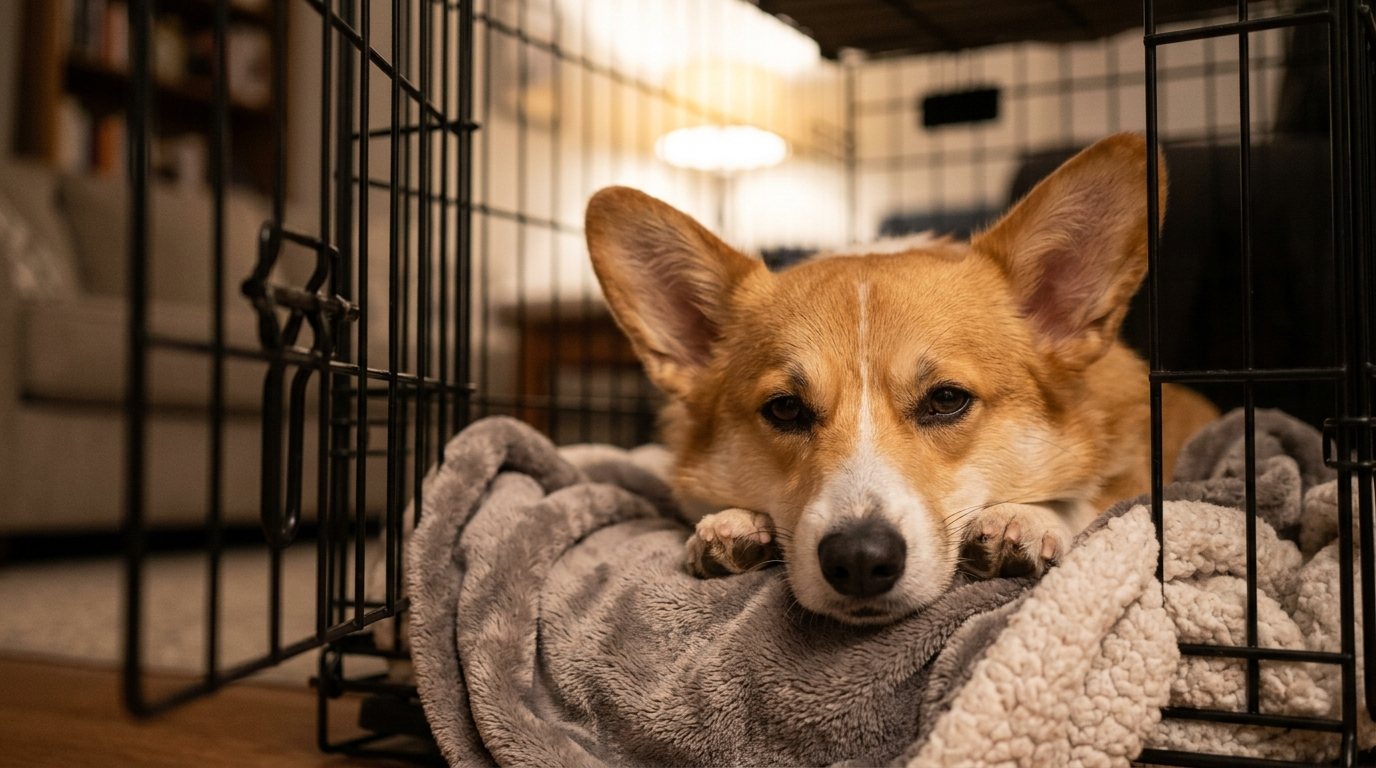
Walk back inside and take your dog to a potty free zone, an area your dog will want to keep clean. A crate or a kitchen blocked off with a dog gate works well for puppies or adult dogs who struggle with house training. If your dog is not yet comfortable in a crate, my crate training guide shows how to build that comfort step by step. After about 20 minutes, repeat the process.
If your dog pees but does not poo, make a judgment call. If you think your dog still needs to go but was too distracted, return to the potty free zone and try again in 20 minutes. If you feel it is safe to give your dog some freedom, you can, and if you turn out to be wrong, adjust your plan.
I only add the cue once the behavior is at least 90% predictable, meaning I am about 90% certain the dog will potty when I walk them up to the designated area. Dogs learn by association, so the cue has to be paired with a behavior your dog already does reliably.
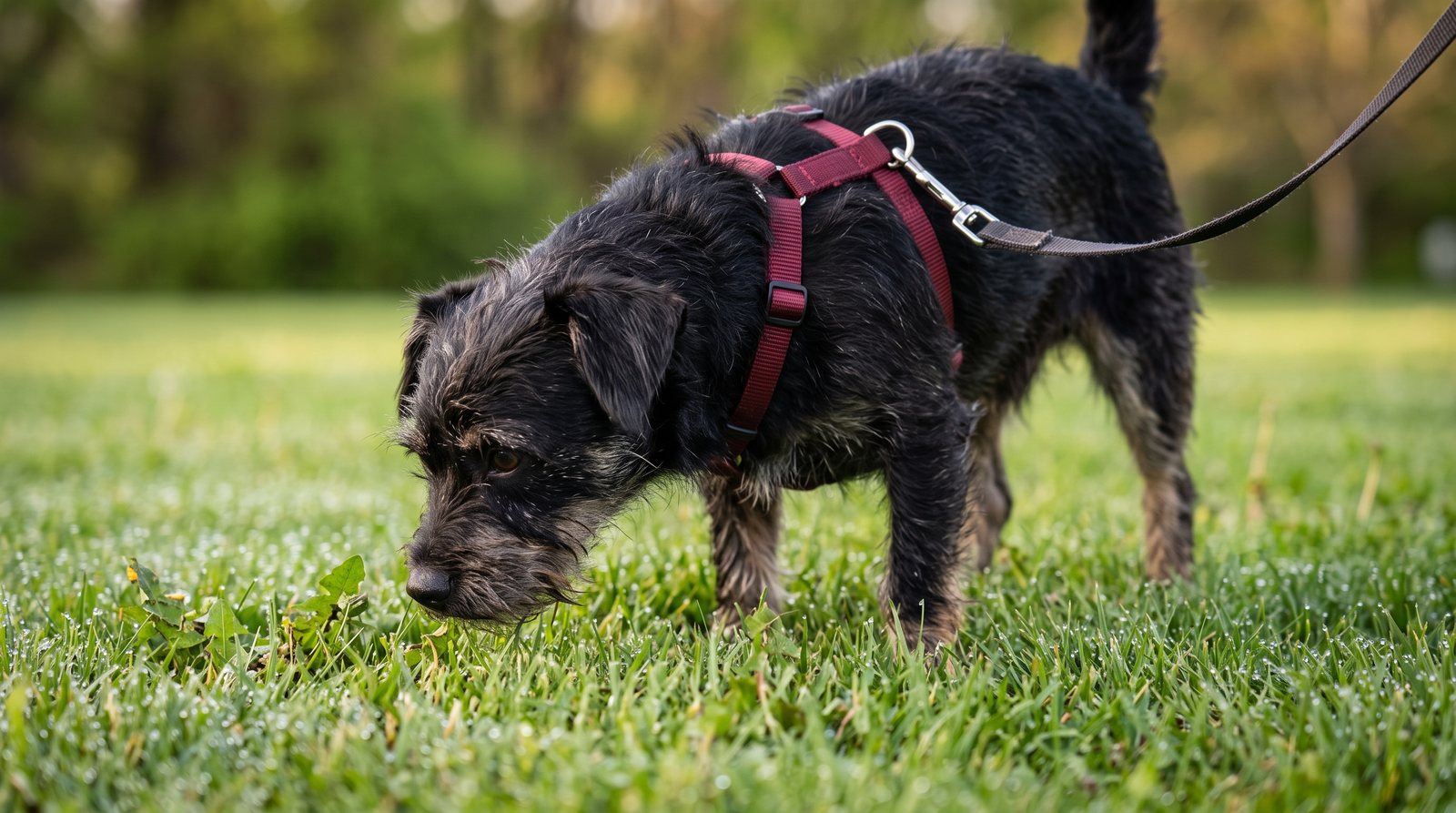
- Watch for the pre-potty motions. Walk to the spot and wait until you see your dog starting to get ready to go.
- Say the cue one time. Use "go potty" or whatever phrase you want, and say it the moment you see those pre-potty motions, like sniffing, circling, and getting into position. That usually puts the cue about a second before your dog starts to go. Repeating it makes it harder for your dog to learn what the words mean.
- Wait, then reward. Once your dog finishes, say "good dog" and deliver three high-value treats.
- Repeat for 3 to 5 more days. Keep pairing the cue with the behavior until the words reliably mean "go potty."
Adding a cue simply means pairing words with a predictable behavior so your dog learns what they mean. It works like teaching a second language.
If your dog is still getting distracted
I do not add the cue yet. I extend Part 1 or change my strategy, which might mean raising the value of the reward, playing a quick game of fetch to get the dog's digestive system moving before the potty trip, or rescheduling outings to better match the dog's potty patterns.
If your dog is too keyed up to focus at all, see my guide on how to calm an overstimulated dog.
Timing takes some skill, because you have to recognize when your dog is about to go. The more you watch your dog's potty habits, the easier it gets to spot those pre-potty motions.
What mistakes slow down potty cue training?
Using the cue too soon
Saying "go potty" again and again to a dog who is sniffing for rabbits will not teach a potty cue. Your dog may decide that "go potty" means "find those rabbits." Build a solid reward history first, then pair the cue with a behavior that is already predictable.
Not going out with your dog
Some people stand inside the house and let the dog go potty alone, rewarding only after the dog comes back in. That teaches your dog that coming into the house is the behavior that earns the treat. Many dogs who walk out the door and immediately walk back in were unintentionally taught to do exactly that.
Reward your dog within 1 to 1.5 seconds of finishing. Any later, and your dog will not understand what the reward is for.
Still having accidents indoors?
A potty cue works best alongside a solid house training routine. If your dog is still having accidents inside, the cause is often the management and routine around potty trips. My guide to potty training an adult dog walks through the full management plan, the potty routine, and how to expand freedom in the house step by step.
Common Questions
Can you teach a dog to pee and poo on command?
Yes. Reward your dog every time they pee or poo in a designated spot until it happens almost every time, then pair a short cue like "go potty" with the behavior. Most dogs learn the cue in about 7 to 10 days when the routine stays consistent.
How long does it take to teach a dog to potty on cue?
For the average dog it takes about 7 to 10 days, as long as you follow the same routine every time. Inconsistency stretches the timeline. Expect roughly 3 to 5 days of rewarding the behavior, then another 3 to 5 days pairing the cue with it.
When should I start saying the potty cue?
Wait until your dog goes potty in the designated spot at least 90% of the time. Then say the cue once, just as your dog begins the pre-potty motions. Saying it earlier, or repeating it, teaches your dog the wrong thing.
What should I use as a potty cue word?
Any short phrase you will use consistently works. "Go potty" is a common choice. What matters is saying it one time, at the right moment, and pairing it with a predictable behavior until your dog learns what the words mean.
What if my dog does not go potty within two minutes?
Walk back inside and take your dog to a potty free zone, such as a crate or a gated kitchen, where they will want to stay clean. Wait about 20 minutes, then repeat the process. Keep the routine the same each time.
Why do I have to reward my dog within a second or two?
Dogs learn by association, so the reward has to arrive within about 1 to 1.5 seconds of finishing. A treat given after your dog comes back inside teaches them that coming inside is what earns the reward.
What if my dog will only go potty when I am not around?
That is a shy dog, and it needs a different plan. Dogs who were scolded for going in the house can learn it is safer to go when people are not watching. Work with a certified professional dog trainer to rebuild trust before using the cue method.
Keep Learning
How to Potty Train an Adult Dog
The management plan and potty routine that stop accidents in the house.
Adult Crate Training
Build a calm crate routine that supports house training.
Mat Work
Teach a distracted dog to settle and keep their attention on you.
Want the structured version of this?
Many dogs struggle to go potty because they are busy taking in everything around them. Mat Work, the first course in the Base Training Method™, is where I teach your dog to settle and keep their attention on you, which builds the calm focus that supports potty training and other skills.
Explore Mat Work →More Help Like This, When You Need It
You came here for one problem. Join the list to hear about new free guides as they're published.