Category: Blog

  • How to Calm an Overstimulated Dog: 5 Rules That Actually Work | Legends Dog Training

    How to Calm an Overstimulated Dog: 5 Rules That Actually Work | Legends Dog Training

    Quick Answer

    If your dog constantly seems wound up, reactive, unable to settle, or easily overwhelmed, the solution may not be more exercise. In many cases, overstimulation occurs because a dog’s nervous system has accumulated stress and excitement throughout the day, making it difficult for them to regulate emotions and make thoughtful decisions.

    Helping an overstimulated dog become calmer involves more than simply burning energy. Dogs benefit from opportunities to decompress, practice calm foundation behaviors, develop recovery skills, and learn how to reconnect with their owner during challenging moments. With consistent training and thoughtful management, calm can become your dog’s new baseline.

    Many behavior problems that look like excess energy are actually signs that a dog is struggling to recover from accumulated stimulation. By focusing on emotional regulation instead of simply increasing activity, owners can help their dogs feel safer, think more clearly, and respond more successfully to everyday challenges.


    Signs Your Dog May Be Overstimulated

    Your dog may be experiencing overstimulation if you notice:

    • Difficulty settling down after activity
    • Constant pacing or restlessness
    • Excessive barking
    • Reactivity toward dogs, people, or environmental triggers
    • Hypervigilance or constant scanning of the environment
    • Difficulty focusing during training
    • Increased jumping or impulsive behavior
    • Overreaction to everyday sights and sounds
    • Trouble recovering after exciting or stressful events


    Introduction

    Many dog owners have heard the same advice: if your dog is hyper, anxious, or reactive, give them more exercise.

    While exercise is important, it is not always the solution. For some dogs, constantly adding stimulation can actually increase arousal and make behavior problems worse.

    Understanding overstimulation begins with understanding the nervous system. When dogs experience stress, excitement, frustration, or anxiety, their bodies release hormones that prepare them for action. If those hormones continue accumulating throughout the day, even small events can push a dog over threshold.

    The goal is not simply to tire a dog out. The goal is to help them recover, regulate emotions, and build skills that support calm behavior in everyday life.


    Rule 1: Prioritize Decompression

    One of the biggest misconceptions in dog training is that every behavior problem stems from insufficient exercise.

    For some dogs, excessive stimulation creates additional stress rather than relief.

    When a dog becomes excited, anxious, frustrated, or reactive, hormones such as adrenaline and cortisol are released.

    Adrenaline prepares the body for immediate action. Cortisol can remain elevated long after the triggering event has ended.

    Throughout the day, small experiences may contribute to stress accumulation:

    • Being left alone
    • Hearing noises outside
    • Visitors arriving
    • Seeing other dogs
    • Exposure to busy environments

    When stress levels are already elevated, adding more stimulation through intense play or highly stimulating environments can sometimes push the dog even further from emotional balance.

    Instead, many dogs benefit from decompression activities such as:

    • Quiet sniffing walks
    • Calm exploration
    • Relaxed training sessions
    • Rest periods
    • Quiet time with their owner

    Calm behavior develops when the nervous system has opportunities to recover.


    Rule 2: Build Foundation Behaviors Before You Need Them

    Calm behavior is rarely created during stressful moments.

    It is developed through repetition in environments where learning can happen successfully.

    Athletes practice fundamentals repeatedly before competition. Musicians repeat scales before performing. Dogs benefit from the same process.

    Rather than teaching endless tricks, focus on a small number of useful behaviors that support regulation and connection.

    Examples include:

    • Checking in with you voluntarily
    • Settling on a mat
    • Moving into heel position
    • Relaxing in a crate or kennel
    • Maintaining focus during simple exercises

    When these behaviors are practiced repeatedly in calm environments, they become familiar, predictable, and emotionally reassuring.

    Over time, these behaviors become tools your dog can rely on when situations become more challenging.


    Rule 3: Practice Recovery Skills Daily

    Recovery is a skill.

    Many owners focus only on preventing reactions, but teaching a dog how to recover from mild excitement is equally important.

    Look for moments when your dog’s emotional intensity is moderately elevated—not completely overwhelmed.

    Examples may include:

    • Excitement when someone arrives home
    • Mild leash distractions
    • Attention-seeking behavior
    • Reacting to sounds outside

    These situations create opportunities for your dog to practice returning to calm.

    Guide them back to familiar behaviors such as:

    • Going to a mat
    • Relaxing in a kennel
    • Checking in with you
    • Returning to heel position

    Every successful recovery strengthens your dog’s ability to regulate emotions in future situations.


    Rule 4: Help Your Dog Recover When They Go Over Threshold

    Even with preparation and training, dogs will occasionally become overwhelmed.

    When that happens, the goal is not perfect obedience.

    The goal is recovery.

    If your dog can still respond, guide them toward familiar foundation behaviors that help them reconnect and settle.

    If your dog is too overwhelmed to think clearly, increase distance from the trigger.

    Helpful strategies include:

    • Moving farther away
    • Creating visual barriers
    • Relocating to a calmer environment
    • Reducing environmental stimulation

    Distance allows stress hormones to decrease and creates space for recovery.

    In some cases, management changes may also be necessary:

    • Walking during quieter times
    • Adjusting guest routines
    • Limiting exposure to overwhelming situations

    Management is not failure. It creates conditions where learning can occur more successfully.


    Rule 5: Become Your Dog’s Guiding Light

    Your relationship with your dog matters.

    Dogs often look to familiar and predictable relationships when navigating stressful situations.

    A useful way to think about this is the image of a lighthouse.

    Storms still happen.

    The lighthouse does not eliminate the storm.

    It provides reliable guidance through it.

    When you consistently practice calm foundation work, maintain predictable expectations, and support recovery, your dog learns where to orient when challenges arise.

    Over time, this relationship helps dogs:

    • Recover faster
    • Make better choices
    • Develop emotional resilience
    • Build confidence
    • Maintain calm behavior more consistently

    The goal is not to eliminate every stressful experience.

    The goal is to help your dog navigate those experiences more successfully.


    Common Mistakes Owners Make

    Assuming More Exercise Is Always Better

    Some dogs need recovery more than additional stimulation. When stress levels are already elevated, more activity can sometimes increase arousal rather than reduce it.

    Waiting Until the Dog Is Fully Reactive

    Intervening early gives your dog a much greater chance of making good decisions and staying engaged with training.

    Only Practicing Skills Around Triggers

    Foundation behaviors should first be built in calm environments where learning is easy before asking dogs to perform those skills around distractions.

    Expecting Immediate Results

    Emotional regulation develops gradually. Consistent repetition and successful practice sessions create lasting behavior change over time.

    Ignoring Recovery

    Dogs become better at calming down when they repeatedly practice moving from mild excitement back to relaxation.


    Key Concepts Covered

    Decompression

    Activities that help the nervous system recover from stress and stimulation.

    Threshold

    The point where emotional intensity becomes too high for effective learning or decision-making.

    Adrenaline

    A hormone that prepares the body for immediate action during excitement or stress.

    Cortisol

    A stress hormone that can remain elevated long after an event has passed.

    Nervous System Regulation

    The process of helping a dog move from high arousal back to a calmer emotional state.

    Foundation Behaviors

    Simple, well-practiced skills that provide predictability and support emotional regulation.

    Recovery Training

    Teaching dogs how to return to calm after excitement, stress, or mild reactivity.

    Emotional Regulation

    A dog’s ability to manage excitement, stress, and environmental challenges effectively.


    Quick Summary

    • Calm comes from recovery, not simply exhaustion.
    • Stress can accumulate throughout the day.
    • Foundation behaviors should be practiced before challenging situations occur.
    • Recovery is a trainable skill.
    • Distance can help overwhelmed dogs regain composure.
    • Strong relationships help dogs navigate stressful situations.
    • Consistent practice builds long-term emotional regulation.


    Frequently Asked Questions

    How do I know if my dog is overstimulated?

    Common signs include pacing, excessive barking, jumping, reactivity, difficulty focusing, inability to settle, and exaggerated responses to everyday events. Many overstimulated dogs appear constantly “on edge” and struggle to recover after exciting experiences.

    Can too much exercise make a dog more hyper?

    Yes. While exercise is important, constantly adding stimulation can increase arousal in some dogs. If stress hormones are already elevated, additional activity may contribute to further overstimulation rather than helping the dog relax.

    What is the best way to calm an overstimulated dog?

    Focus on decompression, calm environments, predictable routines, foundation behaviors, and recovery practice. The goal is to help the nervous system recover rather than simply exhausting the dog physically.

    What does it mean when a dog goes over threshold?

    A dog is over threshold when emotional intensity becomes so high that learning, focus, and thoughtful decision-making become difficult. At this point, management and recovery are usually more effective than asking for complex obedience.

    Should I keep training when my dog is overwhelmed?

    If your dog can still think and respond, simple foundation exercises may help. If your dog is unable to focus, increasing distance from the trigger and helping them recover is usually the better choice.

    What are examples of foundation behaviors?

    Foundation behaviors include checking in with the owner, settling on a mat, relaxing in a crate, coming to heel position, and maintaining calm attention during simple exercises.

    Why does my dog seem fine one minute and reactive the next?

    Stress and excitement often accumulate throughout the day. A dog may appear calm initially but become more reactive as stimulation builds and recovery opportunities decrease.

    Can decompression walks help reactive dogs?

    For many dogs, yes. Quiet walks focused on exploration and sniffing can support nervous system recovery and emotional regulation.

    How long does it take for a dog to become calmer?

    Every dog is different. Consistent practice, management, recovery opportunities, and foundation training generally produce gradual improvements over time rather than overnight changes.

    Is emotional regulation something dogs can learn?

    Yes. Dogs can learn recovery skills, develop stronger coping strategies, and become better at returning to calm when given appropriate guidance and practice.

    Should I avoid all triggers?

    Not necessarily. The goal is usually to manage exposure thoughtfully while helping the dog develop skills for handling challenges more successfully.

    What role does my relationship play in my dog’s behavior?

    A predictable, supportive relationship helps dogs feel more secure and gives them a reliable point of reference during stressful situations. This can make recovery easier and improve overall emotional stability.


    Related Topics

    • Teaching Your Dog to Relax on a Mat
    • Understanding Reactivity in Dogs
    • Why Your Dog Won’t Settle Down at Home
    • How to Build Better Focus Around Distractions
    • The Difference Between Exercise and Enrichment
    • How Stress Affects Dog Behavior
    • Teaching Reliable Check-Ins
    • Understanding Thresholds in Dog Training
    • Crate Training for Emotional Regulation
    • Creating Calm Daily Routines for Dogs

    Ready to Build a Calmer Relationship With Your Dog?

    Overstimulation, reactivity, anxiety, and hyperactivity can feel overwhelming—for both dogs and their owners. The good news is that calm behavior can be developed through the right combination of foundation training, recovery skills, and thoughtful guidance.

    At Legends Dog Training, we focus on helping dogs build the skills they need to navigate the world with greater confidence, emotional regulation, and self-control. Whether you’re working through behavior challenges or simply want a stronger relationship with your dog, structured training can help create lasting change.

    Explore the training programs and educational resources to learn more about the Base Training Method and how it can help you and your dog succeed together.


    About Alyssa Rose

    Alyssa Rose is a Certified Professional Dog Trainer, Behavior Specialist, and founder of Legends Dog Training. With a background in psychology and behavioral science, she specializes in helping dogs overcome challenges such as reactivity, anxiety, hyperactivity, and aggression through practical behavior modification and foundation-based training.

    Alyssa’s Base Training Method focuses on emotional regulation, calm foundation behaviors, and strengthening the relationship between dogs and their owners. Through online education, training programs, and YouTube content, she has helped dog owners better understand behavior and build lasting results through clear communication and structured training.

    Full Video Transcript

    Note: This transcript has been lightly edited for readability while preserving the original meaning of the video.

    If your dog does this, you’ve probably been told the solution is more exercise.

    But for many dogs, more exercise actually makes the problem worse.

    In this video, I’m going to show you five rules that actually help dogs move from overstimulation to calm. I’ll show you exactly what to do in the moment your dog goes over threshold.

    But first, we need to look at something just as important: what should be happening before those moments ever occur.

    Because good training isn’t reactive—it’s proactive.

    This is the heart of the BASE Training Method: building calm in the quieter moments so your dog can access it when situations become more challenging.

    Rule 1: Decompression

    Many dog owners are told that if their dog is anxious, reactive, or hyperactive, they simply need more exercise. So they walk them longer, play more fetch, or add more stimulation to try to burn off energy.

    But for many dogs, this actually makes the problem worse.

    What often looks like excess energy is actually a nervous system that is stuck on high alert.

    When dogs become overstimulated or reactive, important stress hormones are involved: adrenaline and cortisol.

    Adrenaline is the body’s immediate response to excitement or stress. It prepares the dog for action—barking, lunging, chasing, and jumping.

    Cortisol lasts much longer. It keeps the nervous system on alert, sometimes for hours after the exciting or stressful event has passed.

    This means many dogs aren’t simply reacting to what’s happening in front of them. They’re reacting with a nervous system that has already been building stress throughout the day.

    If we drew it on a graph, you’d see your dog’s stress hormones rising with each stressful or exciting event.

    They’re left alone. They hear noises outside. You arrive home.

    And when a dog seems restless or hyperactive, the instinct is often to add more activity.

    Owners may play longer games of fetch, introduce more exciting toys, or take the dog on a walk.

    While some dogs find neighborhood walks calming, that may not be true for a dog whose nervous system is already on high alert.

    The walk can sometimes add to the cascade of stimulation and stress.

    They see another dog. A bicycle passes. A truck drives by. A cat appears. Maybe a squirrel.

    Each of these moments may seem small on their own, but if stress hormones are already elevated, additional stimulation doesn’t release pressure—it stacks more on top.

    Calm doesn’t come from exhaustion.

    It comes from helping the nervous system decompress and recover from stimulation.

    In the BASE Training Method, we begin by creating opportunities for decompression so calm connection becomes part of a dog’s daily rhythm.

    For many dogs, this means choosing activities that meet them in the middle—not boredom and not overstimulation, but the space in between.

    This might include calm sniffing walks in quieter environments, mentally engaging training, emotionally regulating activities, or simply sitting quietly together.

    We’re not trying to physically tire the dog out.

    We’re creating the conditions where calm thinking and connection can happen.

    Once the nervous system has a chance to settle, real learning and growth can begin.

    Rule 2: Build Foundation Behaviors

    Calm behavior isn’t built in high-stress moments.

    It starts in environments where calm thinking is actually possible.

    Think about how athletes or musicians train.

    They repeat simple drills in low-pressure environments until the movements become natural and fluent.

    By the time they enter a more challenging situation, the behavior doesn’t have to be forced.

    They’ve practiced it so many times that it comes naturally.

    There’s a quote from Bruce Lee that I often think about when training dogs:

    “I fear not the man who has practiced 10,000 kicks once, but the man who has practiced one kick 10,000 times.”

    In dog training, many people feel they should teach their dogs countless tricks.

    Spin. Roll over. High five. Shake.

    But when we ask for behavior after behavior after behavior, the dog can become more frantic and frustrated, and the training becomes diluted.

    We’re not looking for 10,000 tricks.

    We’re looking for a few calm behaviors your dog knows so well that they can rely on them even when the world becomes more difficult.

    This is the core idea behind the BASE Training Method.

    We build calm behaviors in environments where learning and connection come easily so those behaviors become fluent and reliable when challenges arise.

    Examples include:

    • Checking in with you
    • Settling on a mat
    • Coming into heel position

    When these behaviors are practiced repeatedly in calm environments, they feel safe, familiar, and emotionally regulating.

    Once those behaviors are fluent in easier environments, we can begin practicing them in slightly more distracting situations.

    You’re not starting over each time.

    You’re building on what your dog already knows.

    That’s how calm becomes the new baseline.

    Rule 3: Practice Recovery Before Working Around Big Triggers

    Recovery is a skill.

    Look for moments when your dog’s emotional intensity is moderately elevated—not completely overwhelmed.

    Maybe they become excited when someone arrives home.

    Maybe they notice a distraction on a walk.

    Maybe they react to a sound outside.

    These moments are valuable training opportunities because your dog can still think and learn.

    Guide them back to familiar foundation behaviors such as going to a mat, settling in a kennel, checking in with you, or returning to heel position.

    Each successful recovery strengthens your dog’s ability to regulate emotions and return to calm in future situations.

    Rule 4: Help Your Dog Recover When They Go Over Threshold

    Even with preparation and training, dogs will occasionally become overwhelmed.

    When that happens, the goal is not perfect obedience.

    The goal is recovery.

    If your dog can still respond, guide them back toward familiar foundation behaviors.

    If your dog is too overwhelmed to focus, create more distance from the trigger.

    Move farther away.

    Create a visual barrier.

    Relocate to a calmer environment.

    Distance allows stress hormones to begin decreasing and gives your dog an opportunity to recover.

    Sometimes management changes are necessary as well, such as adjusting walking times, modifying guest routines, or reducing exposure to overwhelming situations.

    Management isn’t failure.

    It creates better opportunities for learning and success.

    Rule 5: Be Your Dog’s Guiding Light

    Your relationship with your dog plays an important role in how they navigate stressful situations.

    Think of yourself as a lighthouse.

    Storms still happen.

    The lighthouse doesn’t eliminate the storm.

    It provides reliable guidance through it.

    When you consistently practice calm foundation work, maintain predictable expectations, and support recovery, your dog learns where to orient when challenges arise.

    Over time, this helps dogs recover faster, build confidence, regulate emotions more effectively, and make better choices.

    The goal isn’t to eliminate every challenge your dog will ever face.

    The goal is to help your dog move through those challenges successfully and find calm on the other side.

    The ideas discussed in this video—nervous system regulation, calm foundation behaviors, recovery skills, and a steady relationship between dog and owner—form the foundation of the BASE Training Method.

    This approach isn’t about suppressing behavior.

    It’s about helping dogs feel safe enough to make better choices.

    When your dog learns to navigate by that steady light, calm becomes easier to find.

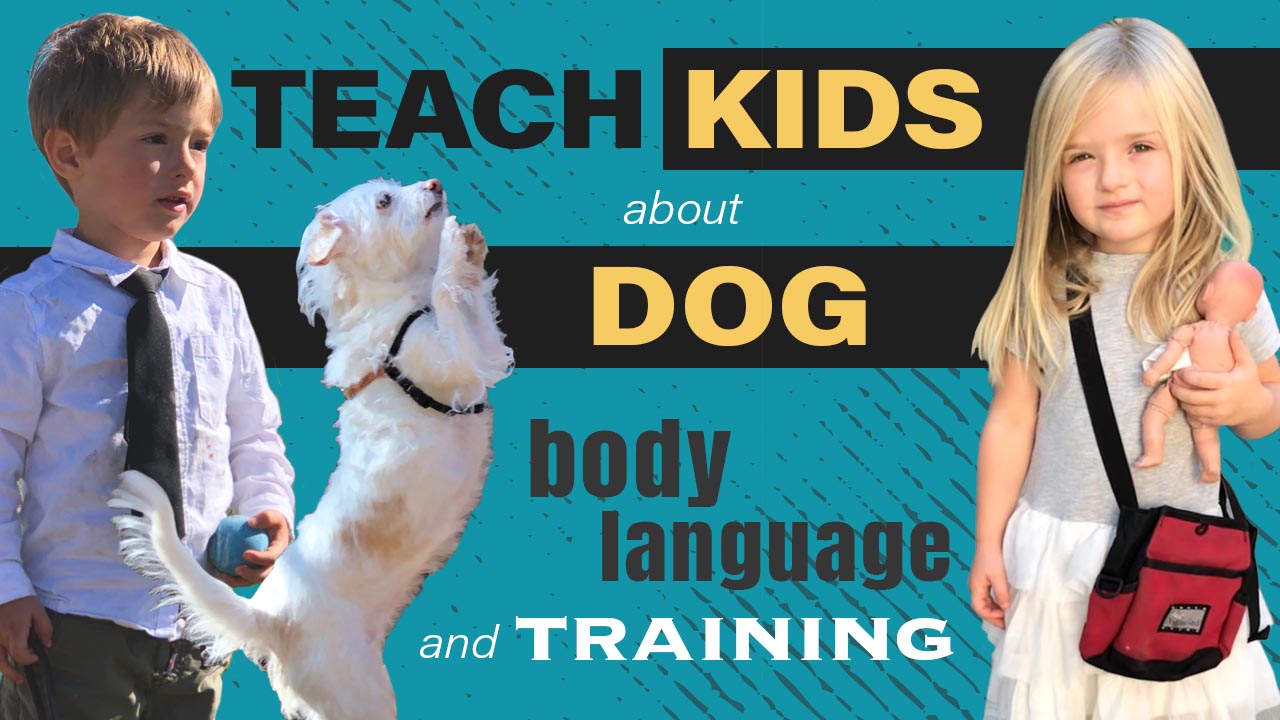
  • How to Teach Kids about Dog Body Language and Training

    How to Teach Kids about Dog Body Language and Training

    [et_pb_section admin_label=”section”] [et_pb_row admin_label=”row”] [et_pb_column type=”4_4″][et_pb_text admin_label=”Text”]

    We love the idea of kids growing up with or around dogs. But what seems like a match made in heaven can become a source of stress and anxiety. I receive a lot of questions in my classes about the best way to make interactions between kids and dogs as positive as possible. Challenges occur when dogs are nervous or hyperactive with kids, and when kids haven’t learned how to interact in a calm and respectful manner with dogs.

    Why is it important for kids to interact with dogs in a calm and respectful manner?

    There are 4.5 million dog bites reported every year in the United States, and approximately half of those reported bites are directed at children. The majority of dog bites occur in the home with a dog that belongs to family or friends. Toddlers in particular can be unpredictable with dogs. They might grab lips, ears, hair or tails. They may try to lay on top of a dog, take the dog’s toy, or chase nervous dogs into small, confined spaces. All of these interactions can test the tolerance of the most patient dogs. The goal is to set the stage for healthy, predictable interactions between kids and dogs at different stages of child development, let’s look at a few different ways we can make that happen. 

    Teach Your Kids to Understand Dog Body Language.

    The same body language applies to petting.

    Dog bites can happen when we decide to pet a dog, but ignore their body language. Dogs are more likely to bite when they’re not feeling well physically or emotionally. If a dog is experiencing an upset stomach, an undiagnosed ear infection, or if they are feeling stressed or nervous with noise or activity in the environment.

    Any dog can bite. To reduce risk of dog bites and to promote healthy relationships between kids and dogs it’s important to teach kids to read, recognize and respect what your dog is trying to communicate.

    Before we jump into the next exercise, let’s start off with some simple facts.

    1. Not all dogs want to be pet. 
    2. Most dogs do not like to be pet on top of their head. 
    3. Respect your dog’s individual preferences, there’s no benefit to forcing unwanted attention. 
    4. Petting can be contextual. This means your dog’s preferences may change depending on the time, place and person. We’re the same. Sometimes we want a hug, and sometimes we don’t. We might value a hug from a trusted friend, but feel uncomfortable being hugged by a stranger. And sometimes we just want space. Dogs are like that too. 
    5. If a dog says “no thank you” to petting – don’t take it personally.

    Try this next exercise.

    If you have a dog that enjoys petting, and seems comfortable with your kids – try this next exercise. You can also take a mental note of this exercise and apply these concepts the next time you or your kids meet a social dog at a family member or friend’s house. 

    Sit down with your kids and invite your dog to approach. If your dog approaches you can gently pet their shoulder or beneath their ear. Stop regularly and see what your dog says. If your dog steps forward or nudges your hand they are most likely saying “yes, more petting please.” 

    scared dogs licking lips and backing away

    If at any point your dog backs away, licks their lips, pulls their ears back or tucks their tail – these are nervous behaviors. Teach your kids that this is your dog’s way of saying “no, thank you.” The same would hold true if they showed any hesitation or reluctance to approach in the first place. It’s ok for your dog to opt out. This is your cue to move on to a new activity.

    Reading to Your Dog.

    Set up a reading space where you can sit with your kids and read stories to your dog. Older kids can practice their reading skills by reading familiar books. This is a great calming activity for young or excitable dogs, and it’s a great trust building exercise for nervous dogs. Encouraging this activity can also help kids develop a more positive attitude towards reading. In the end, it’s a win-win for everyone.

    Search Games.

    Have your dog wait on a training mat or platform while your kid hides a high value piece of food. It’s important to pick something that your dog loves. Once the item is hidden you can have your kid walk back to your dog and say “Find it.” Then encourage your dog to find the hidden item. You can play a similar game with one of your dog’s favorite toys. Beatrix loves search games that involve her blue dumbbell. If your dog doesn’t have a solid “wait” or “stay” you can keep your dog on a harness and leash instead. Start with easy finds and gradually build up in level of difficulty as your dog shows you they understand the game. 

    Next, I want to show you different games that are well suited to different age groups. A 4 year old will need games with simple rule structures that focus on easy to understand concepts. As kids grow they will be able to practice games with multiple steps and advancing mechanical skills. You might even find that these games will improve your dog’s ability to walk on a loose leash, or teach your dog to be more reliable at coming when called. I’m a big fan of fun training games with real world carry over.

    Positive Training.

    Kids love the idea of training with dogs. And it’s easy to understand why, as one of my kids once said “it’s like we speak the same language!” And this truly is the best part of training – the more you do, the closer you become, especially if you are implementing positive reinforcement based methods. That being said, it’s important that adults spend the time training with dogs first. Once the training is well rehearsed it can then be generalized with kids with a much higher level of success. 

    One of the biggest challenges when it comes to teaching kids how to train with a dog is that they are quick and erratic in their movements. This is especially pronounced if kids are nervous about a dog taking food from their hand. It’s important to respect each individual’s comfort level and find an exercise that meets everyone’s needs and abilities.

    “Hopping Lily Pads” – A game for ages 3 to 5.

    Young kids, ages 3 to 5 will love this training game. I call it “Hopping Lily Pads.” Show your little one how to deliver treats one at a time on a Lily Pad. These are actually called Poly Spots that are commonly used for kids in athletic programs.  Have your kid deliver 3-5 treats at each Poly Spot. Then call out a new color and have your kid move to the next spot. The reason this game is so helpful is because it teaches kids to invite dogs to approach them, instead of advancing on their space. Interactions should always be posed as an invitation, never forced. Delivering treats to a spot will also promote confidence in kids that might be nervous about delivering treats directly to a dog’s mouth. This is also a great idea for dogs that might be uncertain or “grabby” when taking treats. The Poly Spots create a physical target that will make the rules of the training easier to understand. A parent or guardian should actively supervise these interactions so that they can offer guidance as necessary.

    A game for ages 6 to 9.

    Older or more confident kids, ages 6 to 9, may do better with moving exercises. Set the Poly Spots in a line about 2-3 feet from a fence line or wall. The Poly Spots should be spaced out at 4 foot intervals. Your kid can walk from Poly Spot to Poly Spot, stopping at each one. Once your kid stops, your dog will likely stop also. Have your kid deliver food to your dog when they stop. It doesn’t matter if your dog is standing or sitting, as long as your dog has four paws on the ground.  This exercise encourages calm, indirect body language and will improve trust and communication between dogs and kids. You may also find that this exercise can carry over to a better connection and synchronization of movement when out for walks or on a hike.

    Hide and Seek.

    Another fun game is to show your dog a favorite treat, and then hide. This is a variation of the search game we talked about earlier. Be careful not to do this with kids that are nervous with dogs, or dogs that are nervous with kids. Some kids might find it scary to have a dog dashing in their direction. And dogs might become scared if kids unexpectedly jump out from a hiding spot.

    Relaxation Stations.

    Relaxation Stations.

    Toddlers and young children should be actively supervised whenever they interact. Make sure that your dog has access to safe spaces where they can relax without the constant worry of kids interrupting their naps or forcing unwanted petting. Sit down and talk to your kids about what it means to give a dog space when napping or resting. Baby gates can provide peace of mind when you are on a phone call, preparing food or if you are unable to actively supervise for any reason. 

    boy on couch with drink cuddling with black dog on his lap

    There are 4.5 million dog bites reported in the United States every year, half of those bites are directed at kids. Those bites are predictable and preventable. We can make this better – so if you find the information in this video helpful, please share it. Teach your kids to be more aware of what your dog is telling them through body language and behavior, and encourage others to do the same. Harmonious interactions between kids and  dogs is all about planting seeds of respect and kindness early on. It takes time, patience and understanding, but there is nothing more beautiful than watching those relationships flourish.

    If you liked this video and you want to learn more about positive and effective methods to address behavioral issues in dogs, check out these playlists. These playlists provide insights into behavior modification training for dogs that exhibit anxious, reactive, hyperactive or aggressive behavior.

    Let me know if you found this helpful. Please be sure to subscribe for more videos on Youtube and leave a comment on this blog page.

    [/et_pb_text][/et_pb_column] [/et_pb_row] [/et_pb_section]
  • Stop Puppy Biting, Barking and Jumping

    Stop Puppy Biting, Barking and Jumping

    [et_pb_section fb_built=”1″ admin_label=”section” _builder_version=”4.16″ global_colors_info=”{}”][et_pb_row admin_label=”row” _builder_version=”4.16″ background_size=”initial” background_position=”top_left” background_repeat=”repeat” global_colors_info=”{}”][et_pb_column type=”4_4″ _builder_version=”4.16″ custom_padding=”|||” global_colors_info=”{}” custom_padding__hover=”|||”][et_pb_text admin_label=”Text” _builder_version=”4.16″ background_size=”initial” background_position=”top_left” background_repeat=”repeat” global_colors_info=”{}”]

    Puppy biting can be very frustrating. This blog is going to lay out a few different strategies to help you stop puppy biting, barking and jumping for attention. But first, it’s important to note that puppy biting in particular is a normal and natural part of your puppy’s development. Puppy biting is a social behavior, it’s their way of asking someone to play. Biting can become more intense when a puppy is over-stimulated, frustrated and when they are over-tired. The same can be said for barking and jumping.

    People can sometimes encourage these behaviors in the early days and weeks that a puppy comes home because it’s hard to imagine that it could become a problem later on down the road. 

    two boys playing with a toy multi-poo puppy on a blue rug

    Puppies that are raised in a home with kids are also more likely to exhibit these high arousal behaviors as most kids are typically a little louder and more active than the average adult.

    We will discuss the do’s and the don’ts of teaching puppies not to bite, bark and jump. The ultimate goal is to teach your puppy to greet and ask for playtime in a calmer and more polite manner, which can help stop puppy biting.

    Rule #1: Create Calm Associations with Your Hands

    woman hand feeding mulit-poo puppy on a red training mat

    DO teach your puppy that hands are for teaching, not for biting

    Sit down with your puppy for 5-10 minutes, once or twice each day to work on calming exercises. Build a reinforcement history for calmly standing, sitting or lying down on a training mat. With repetition these are the behaviors your puppy will default to when they are asking for something they want like food, attention or playtime.

    Use your puppy’s meals, and/or supplement those meals with a moist, meaty, nutritious training food that can easily be broken down into small pieces without crumbling. 

    DON’T grab your puppy by the scruff, hold their muzzle shut

    Don’t do anything that might result in your puppy becoming apprehensive, fearful or defensive with your approaching hands. This type of advice is common, but it can also set the stage for a contentious relationship with your puppy. Some puppies will become hand shy and others will become combative when you address undesired behavior in an aggressive manner.

    Rule #2: Healthy Outlets for Playful Behavior

    multi-poo puppy biting on a tug toy as he plays with woman

    DO make playtime with your puppy part of your day-to-day routine

    Give your puppy access to 3-4 toys at any given time. Rotate your puppy’s toys every 2-3 days to build even greater interest. Experiment with toys and chewies that have bumps and ridges that will feel good on your puppy’s sensitive gums. You should also put aside 2-3 special toys,  like a soft tug or two squeakie tennis balls. These special toys should be saved for one on one time with you and your puppy. I usually set aside 5-10 minutes, 2 or 3 times each day for focused play sessions. 

    Play is one of the best ways to build a stronger bond with your puppy, it will also create a healthy outlet for their playful energy that would otherwise be expressed through biting, jumping and barking.

    If your puppy becomes over-stimulated in play and begins barking, biting, jumping or mouthing – make a point of keeping your play sessions low key. It’s also a good idea to teach your puppy what I like to call “The 0-60 game.” I encourage puppy parents to alternate between calming exercises on a training mat or inside an open door crate and a 30-60 second play session. Ping ponging between these two activities will teach your puppy how to regulate arousal by going from calm to excited and back to calm. 

    DON’T use your hands to roughhouse with your puppy

    I love playing with my adult dogs by getting on the ground and gently pushing them around. My dogs might respond playfully by gently placing their teeth on my hand or arm. But they also have the ability to read social cues and regulate play, which means that they know when to slow down and when to take a break. 

    two boys playing with a puppy with their hands

    I avoid playing with puppies with my hands because they aren’t as skilled at reading social cues and regulating play. Most puppies will not understand why it’s ok to bite on hands in some situations, and not in others. It’s a good idea to avoid sending mixed messages.

    Regulating playful behavior is a developmental skill that takes time and maturity to learn. You can help your puppy learn this skill by giving play time a little more structure and context to play in their first year. Their “special toy,” like a tug toy or squeaky tennis ball, will become the green light for play time, while hands will be more like a yellow light that will encourage your puppy to slow down and be calm.

    Rule #3: Alone Time

    puppy relaxing half way out of his crate on the grass watching people go by

    DO make sure to have quality one-on-one time as well as quality down time

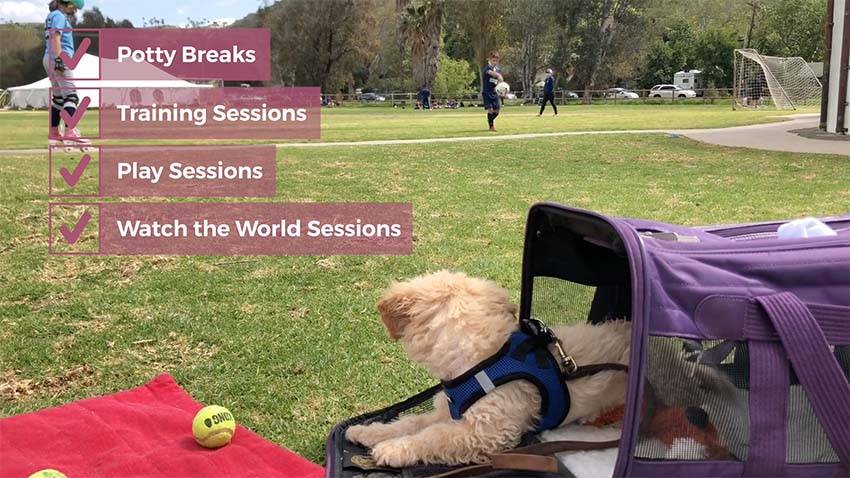
    Make a habit of scheduling potty breaks, training sessions, playtime and “watch the world sessions” into your puppy’s daily routine to make sure that your puppy’s physical, mental and emotional needs are being met on a daily basis. It’s also a good idea to give your puppy regular opportunities to relax or nap in a safe, gated area. 

    DON’T leave your puppy to roam freely when unsupervised

    puppy biting on a purple portable crate

    This will set the stage for bad habits to develop. Puppies that are unsupervised might eat your plant, chew on electric cords or bite, bark and jump to get your attention when they’re feeling bored. Yelling at your puppy in those moments is not going to solve the problem, because … negative attention is still attention. 

    This is why it’s so important for your puppy to have alone time in a safe, gated space when the attention is not 100% on them. You might be thinking – “won’t my puppy just bark in the gated area?” The answer to that question is most likely – yes, unless you condition your puppy to that space first. And if you want to learn how to do that, you should probably check out this video I created called “How to Crate Train Your Puppy for Separation.”

    Spoiler alert, most of the training is done with an open door crate and a gated area. 

    Once your puppy is adequately conditioned to this space, it will become a valuable asset when you are eating dinner, watching a movie, writing an email or making a phone call.

    Rule #4: The Art of Redirecting your Puppy

    puppy on womans lap looking at her while she pauses

    Coming back to “Calm”

    Even if you are doing everything right there still might be times that your puppy bites, barks or jumps. In these moments it’s important to focus on helping your puppy come back to calm.

    You should freeze, draw your hands back to your chest (pause) and then show your puppy what you want them to do. Practice training exercises that are incompatible with barking, biting or jumping. If you are doing daily training exercises, it should be easy for your puppy to connect the dots. 

    I will usually continue training for 5-8 minutes inside of the puppy’s gated space and end the session with a calming activity, like giving the puppy a chewie or a stuffed kong. With repetition you will find that it will become easier to prompt your puppy to offer desired behavior, and that your puppy will offer these behaviors more and more in place of biting.

    What about screaming “OW” in a high pitched voice, or saying a stern “NO?”

    Attempting to suppress behavior through verbal reprimands is usually counter-productive. In your first few attempts this approach might appear to “work,” but with repetition puppies will become desensitized to these sounds or words, or worse, it can add to the excitement of the situation and make the biting even more intense.

    Rule #5: Calming an Overstimulated Puppy

    woman sitting outside a dog gate while puppy chews on a bully stick on a training mat i the kitchen next to his crate

    Gated areas are golden

    There will be times where your puppy is so hyperactive that they will not engage in training or will revert back to hyperactive training after the training ends. This is usually a sign that the puppy is tired or overstimulated. When this happens it’s a good idea to walk the puppy into their gated area for a training session. I do this for three reasons:

    1. Changing the environment can change the puppy’s mindset.
    2. The puppy might associate the space with calming exercises and getting into a learning mind set faster because of that association. 
    3. If the puppy continues to bite I have the option of stepping onto the other side of the gate.

    DON’T isolate your puppy

    If it’s necessary to step on the other side of the gate, I will almost always sit down next to the gate and give the puppy a chewie or a stuffed KONG. Your presence will help to promote calm behavior and this is a huge part of the training. The goal is to help your puppy learn to de-escalate and come back to calm. Leaving your puppy alone in this space when they are in a state of high arousal is likely to have the opposite effect.

    What about using a shaker cans or a spray bottle to get the puppy to stop barking and biting?

    Aversive tools and approaches can damage your relationship in multiple ways. With more timid or insecure puppies shaker cans and spray bottles can create trust issues that can negatively impact your relationship with your dog into adulthood. More confident puppies might develop a callous to the punishment, which usually results in people using more and more aversive methods.

    The last problem is that these approaches work to suppress behavior, but they do nothing to teach the puppy the skills they need to manage and think through excitement and frustration in a constructive way. Instead, help your puppy learn how to regulate arousal by practicing the calming activities mentioned earlier. 

    Puppy biting can be extremely frustrating, hopefully these tips will help you transform these challenges into an opportunity to bring your puppy’s training and communication to a new level.

    If you found this blog helpful, check out, “6 Pillars of Raising a Legendary Puppy!” and “How to Potty Train a Puppy“.

    Let me know if you found this helpful. Please be sure to subscribe for more videos on Youtube and leave a comment on this blog page.

    [/et_pb_text][/et_pb_column][/et_pb_row][/et_pb_section]
  • 10 Rules You Need to Know About Reactive or Aggressive Dogs

    10 Rules You Need to Know About Reactive or Aggressive Dogs

    One trigger vs. many triggers. Sometimes our dog’s reactive behavior is easily linked to one specific environmental trigger and sometimes, it’s not. Stress accumulates. The better you are at reading and responding to subtle signs of stress, the more effective you will be in training. You don’t always have to know what causes the stress in order to help your dog work through it.

    Rule #4: Have A Good Management Plan

    A good management plan is just as important as a good training plan. The more often your dog practices certain undesirable behaviors, the more habitual those behaviors will become. Changing the environment or your dog’s daily routine is sometimes 100% necessary in setting the stage for successful behavior modification.

    Rule #5: Make Sure it’s Not Only the Squeaky Wheel That Gets the Oil

    There are two ways that a dog can respond to a stressful situation; they can either behave in an active manner or a passive manner. Their response might change depending on the context of the situation. Both require the same level of attention and understanding.

    Active Manner

    Dogs that have a tendency to actively respond to stress triggers are more likely to receive training attention. (barking, growling, charging)

    Passive Manner

    Passive stress responses usually go unnoticed or are dismissed as being “just fine.” Those are dogs that shut down or exhibit more subtle stress signals. Both require the same level of attention and understanding.

    Rule #6: Working “Under-Threshold”

    Excessive barking, sudden loss of appetite, ADHD type behavior, stress whining, clinginess (wanting to be picked up, demand barking, jumping or pawing for attention) are just some of the symptoms that your dog has hit their stress threshold. Giving your dog more space away from the stress trigger, or removing your dog from a stressful environment, is the best way to help meet your dog’s needs and prevent regression in training.

    Rule #7: Predict, Prevent, Practice

    ​Assess your dog’s behavioral responses and then use that information to predict and prevent undesirable behavior. Once the initial assessment is conducted you should no longer be testing your dog, you should be training your dog. This means that you should be setting them up to practice the behaviors that you do want to see, while minimizing the probability that they will fall back to less desirable tendencies.

    Rule #8: Capture Calm Behavior

    Don’t let your dogs good behavior go unnoticed, reinforce it. Sometimes we only train with our dogs when we are seeing the problem behavior. Successful training is about being pro-active. Make training a part of your daily routine so that you are routinely reinforcing your dog for behaviors that you love, instead of solely reacting to problem behaviors. 

    Rule #9: Be Prepared

    You don’t always know when a teachable moment will present itself, don’t be caught off guard. Have the necessary tools at hand to help set the stage for success: high value treats, harness, leash and training pouch are a few functional training tools to have at hand in a moment’s notice.

    Rule #10: Choose Your Reinforcement .. Wisely

    happy howies dog food treats packaging on white background

    The value of the reinforcement you use, relative to the level of distraction in your training environment, will determine the efficacy of your training program. Consistent, reliable responses require a high value reinforcer. You’ll get the most traction from a training food that is moist, meaty, aromatic, and easy to break into small pieces without crumbling. A tennis ball or a good tug toy might be worth its weight in gold if your dog has high toy drive. Conversely, giving a dog a dry biscuit, a pat on the head or a “good boy” is generally not significant enough to yield solid, reliable training results.Post navigation

  • How to Crate Train an Adult Dog

    How to Crate Train an Adult Dog

    Crates can be useful for travel, for dogs that need crate rest for medical reasons, or to keep dogs safe and out of trouble for short periods during the day. Some dogs can be comfortable in a crate overnight as they sleep but they should not be used for more than 2-3 hours during the day. Over use of crates can be detrimental to a dog’s mental and physical health.

    Crate training sessions were roughly 5-10 minutes in length, and were conducted at least 1x each day for 10 weeks. 

    These training exercises require a high rate of reinforcement rate. I am using a moist, meaty, nutritious food that supplemented meals. In some cases, I used his breakfast and dinner for training.

    The Goal

    The goal was to help dogs become comfortable with an open or closed door crate. Calmly and casually walking in and out and exhibiting relaxed body language and behavior while inside.

    The Crate Training Process

    Step 1: Disassemble Crate

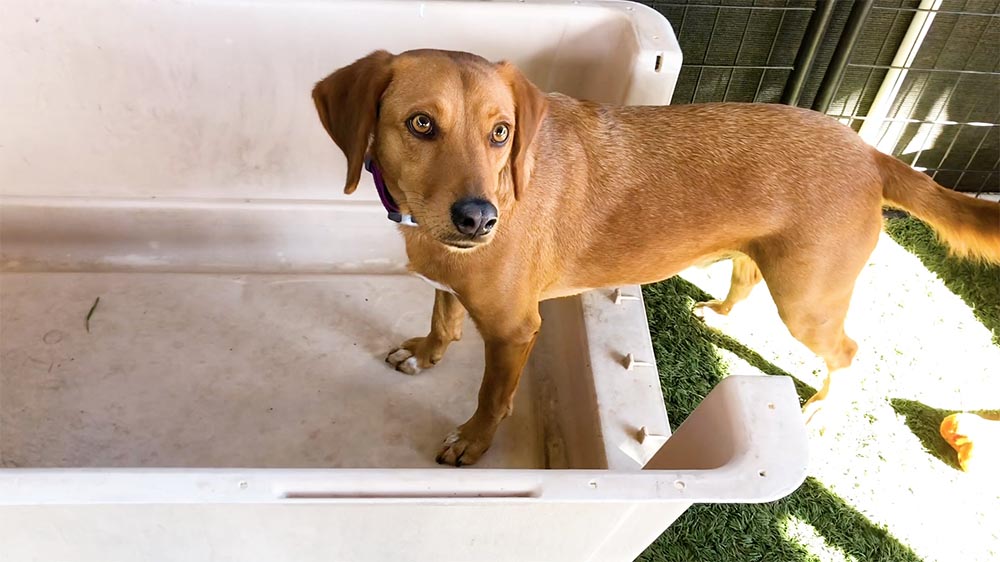
    brown dog standing next to a dog crate

    If your dog is very nervous with a crate, it’s a good idea to disassemble the crate and help him become comfortable with approaching and interacting with the bottom half first. If your dog is nervous about taking the food from the front lip of the crate, then place it 1-2 feet in front of the crate, or more, if that’s what your dog needs. Your dog WILL progress if you allow them the opportunity to progress at their individual pace.

    Be patient. Forcing your dog into the crate, this will only prolong the crate training process.

    Step 2: “Two Paws In”

    brown dog with 2 paws inside a dog crate

    Once your dog is freely taking food off of the lip of the crate, you can begin to reinforce if he places one or two paws in the crate. Placing a non-slip training mat inside can facilitate the crate training process. 

    Aim to reinforce for 10 – 15 second periods of time, before providing a short one minute break. This break will give your dog the opportunity to process the training, while building focus and engagement. It also also helps because your dog will come to trust that you will never push them beyond their comfort level. The less force you use, the more confident your dog will become and the faster your training will progress.

    Step 3: “Four Paws In”

    two brown dogs with four paws each inside a dog crate

    The next step is to teach your dog to step inside the crate, and then subsequently turn around. Break this down into two separate parts. When dogs step in, and quickly back out, or if your dog is stretching to take the food – this is a sign that you have raised criteria too high.

    Step 4: “Bottom + Top”

    brown dog standing inside a dog crate taking food from a dog trainer

    Once your dog is stepping in and turning around you can begin the process of re-assembling the crate. You may need to drop criteria, by reinforcing once again for one or two paws inside. In some cases, it can be helpful for your dog to see another dog “model” the desired behavior.

    Step 5: “Crate with Gate”

    brown dog going inside a dog crate to explore

    Add the gate back into the picture when your dog is fluently walking in and out of the assembled crate. When you first put the gate back on, you do not need to begin closing the gate right away. Assume that the sight and sound of the gate will be challenging enough. If you see your dog reaching for the food, or stretching out their back legs this is a sign that criteria is set too high. Deliver the food in a way that allows your dog to step forward and take it without any sign of hesitation.

    Step 6: “Closing the Gate”

    brown dog inside dog crate with a closed gate on the front

    Close the gate for 10 – 20 second periods of time and provide a high rate of reinforcement while the door is closed. When you open the gate, provide a few more pieces of food before ending that training set. Many dogs find this step to be very challenging because they could experience stress associated with being confined, in combination with the sound generated by the gates locking mechanism. If your dog is not taking the food, or rushes out the second the gate opens, this is a indication that you should spend more time on the previous step. Let your dog set the pace. I normally close the gate once each session. Opening and closing the gate in repetition has the potential to generate more anxiety, especially for dogs that are sound sensitive or anxious with confinement.

    Step 7 (Final Step): “Sleeping in the Crate”

    The final step is “adding duration” in a manner that helps your dog associate the crate with a place of rest and relaxation. You can do this by positioning the crate next to your bed, and having your dog sleep there at night. Place comfortable bedding in crate, and keep the crate door open for 3-7 days before you attempt to close the door at night.

    Bonus Training Tip

    Think about your “point of delivery.” Point of delivery is the physical location of the food when its offered to the dog. If you are “overarching” criteria, you will know this, because you’ll notice your dog’s hind legs and neck are stretching out. If your dog is comfortable with your point of delivery, you will notice their hind legs are square beneath them and there is no reluctance to move forward to accept the food.

    Let me know if you found this helpful. Please be sure to subscribe for more videos on Youtube and leave a comment on this blog page.